

For decades, we’ve boxed the concept of past lives into a neat little package: a person dies, their soul drifts into the ether, and they are reborn as a crying newborn baby who completely forgets their past until years later. But if you look into reincarnation real stories, you quickly realize that the universe doesn’t always follow a clean slate.
In the summer of 1985, deep in the heart of Uttar Pradesh, India, a case shattered that comfortable theory. It didn’t involve a baby. It involved two grown women, a sudden death, a flatline, and a claim that sounded like a cosmic glitch straight out of a mythological thriller.
Researchers have deeply researched and documented the undeniably eerie narrative of Shiva Tripathi and Sumitra Singh. Later, it became one of the most compelling reincarnation stories for the world-famous scientists. They came from the University of Virginia, struggling for an explanation.
The Two Paths That Crossed in Death
To understand the sheer impossibility of what happened, you have to look at the two women involved. They lived miles apart, belonged to completely different social worlds, and would have never crossed paths in normal life.
The Educated Brahmin: Shiva Tripathi
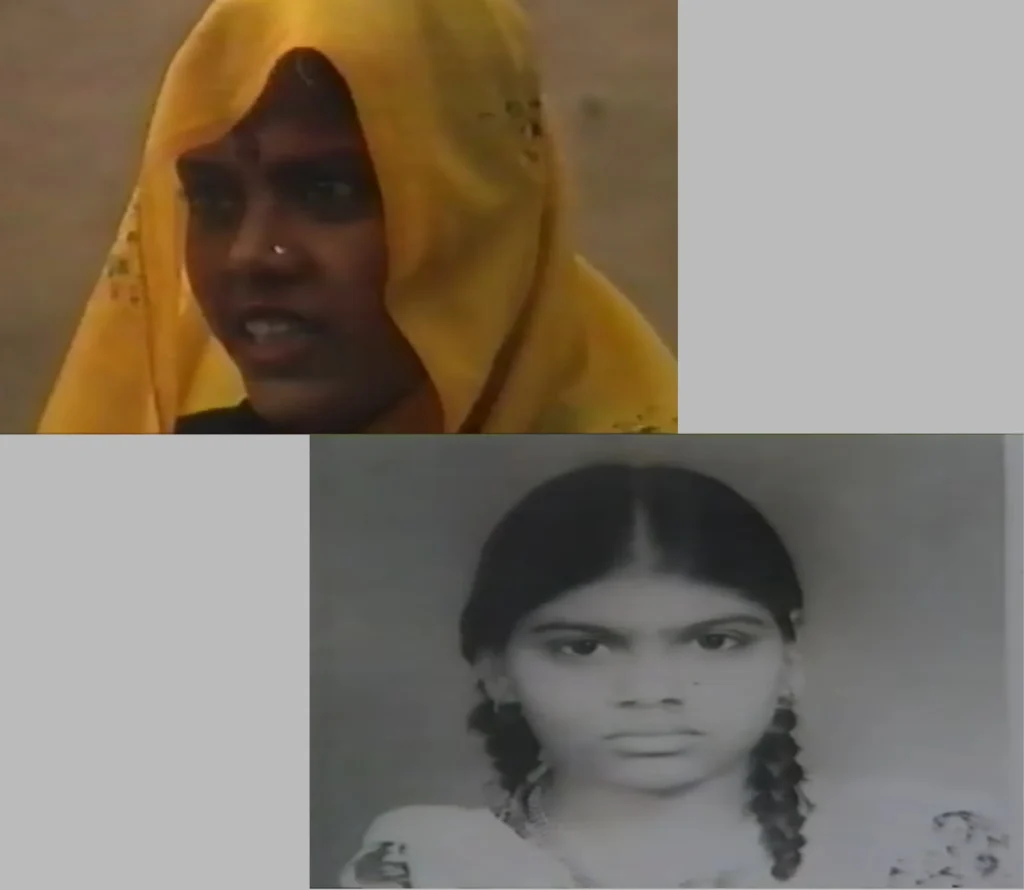
Shiva was a 22-year-old woman living in the bustling town of Dibiyapur. She was highly educated, refined, and belonged to a proud, upper-caste Brahmin family. She could read and write fluent, sophisticated Hindi. Tragically, her life was cut short. On May 18, 1985, following a bitter and volatile dispute with her in-laws, Shiva died under deeply suspicious and violent circumstances. Her body was swiftly cremated before an autopsy could be fully processed.
The Rural Village Girl: Sumitra Singh
Some 50 miles away lived Sumitra. She was a simple, completely illiterate woman married to a lower-caste man in a rural, secluded village. She spent her days tending to her young son and doing domestic chores. She had no knowledge of Dibiyapur, let alone the internal domestic disputes of the Brahmin Tripathi family.
The Sudden Switch: A Five-Minute Flatline
Two months after Shiva Tripathi was reduced to ashes, Sumitra’s health began to spiral. By July 1985, she was plagued by violent, unexplainable seizures and deep hypnotic trances.
On July 19, 1985, Sumitra looked at her family and calmly told them she was going to die. Minutes later, her breathing stopped. Her pulse went entirely flat. Her body grew cold, and her grieving family gathered around her to prepare for a funeral.
For five agonizing minutes, Sumitra was clinically dead.
Then, she suddenly gasped for air. Her eyes flew open. But the woman who woke up was no longer Sumitra.
“Get away from me,” she screamed at Sumitra’s husband. “Who are you people? Where am I? I am Shiva Tripathi. My in-laws murdered me.”
The Evidence Science Couldn’t Explain
If this were a simple case of a psychological breakdown or sudden psychosis, it wouldn’t rank among the top reincarnation real stories investigated by science. What followed baffled investigators because the “new” Sumitra possessed knowledge, skills, and behaviors she physically could not have faked.
When Dr. Ian Stevenson (the pioneer of reincarnation research) and Dr. Satwant Pasricha arrived to investigate, they documented a mountain of undeniable empirical evidence.
1. Sudden, Impossible Literacy
Sumitra had never spent a single day in a classroom. She couldn’t read a signpost, let alone write her name. Yet, the moment she woke up as Shiva, she could read and write fluent, complex Hindi. She began writing letters to Shiva’s real family, using grammar and vocabulary that an illiterate village girl literally did not have the cognitive framework to know.
2. The Shift in Manners and Personality
In India’s strict social landscape of the 1980s, caste behavior was deeply ingrained from childhood. Sumitra immediately began acting like an elite Brahmin woman. She refused to eat the food prepared by Sumitra’s lower-caste family, demanding strict ritual purity in her cooking. Furthermore, she treated Sumitra’s husband not as her companion, but with caste-based disdain and coldness, completely refusing to sleep in his bed or acknowledge her own biological child.
3. Flawless Blind Recognition
Word of this “possession” eventually traveled 50 miles to Dibiyapur, reaching Shiva’s grieving biological father. Suspicious but desperate for answers, he traveled to Sumitra’s remote village accompanied by several extended family members.
They arrived unannounced. Yet, the moment Sumitra saw them, she burst into tears, ran to Shiva’s father, and embraced him. Over the course of the investigation, Sumitra correctly identified over 20 of Shiva’s relatives on sight. She didn’t just name them; she used intimate, highly specific family nicknames, brought up private memories only Shiva and her father knew, and interacted with each relative with the exact emotional nuance (grief, love, or resentment) that the deceased Shiva had held in life.
The Story of the “In-Between”
When researchers asked the reborn Shiva what had happened during the two months between her death in May and her awakening in July, she gave an account that sounds like ancient Vedic mythology brought to life.
She claimed that after her violent death, the grim messengers of Lord Yama (the Hindu God of Death) dragged her soul to a dark, hellish realm. However, upon reviewing her cosmic records, the celestial authorities realized a horrific mistake had been made: Shiva was not supposed to die yet.
According to her story, a divine intervention occurred involving the goddess Santoshi Mata, and Lord Yama permitted her to return to Earth. But because her biological body had already been burned to ash on a funeral pyre, someone redirected her soul. They guided her to the body of Sumitra Singh—a woman whose own life force was expiring at that exact micro-second on July 19.
Reincarnation or Body Snatching?
Sumitra’s husband and family, terrified by the change, initially assumed she was possessed by a demonic spirit. They subjected her to brutal, traditional exorcisms, pouring burning spices into her eyes and beating her to drive the spirit out. Through it all, the soul inside remained steadfast: “I am Shiva.”
Eventually, the exorcisms stopped. Shiva’s biological family fully accepted Sumitra as their daughter reborn, frequently bringing her back to her true hometown. Sumitra lived out the rest of her days refusing to look at mirrors because she couldn’t reconcile the face staring back with who she knew she was.
To this day, the case of Shiva-Sumitra remains one of the most rigidly documented cases of “Adult Possession Reincarnation” in scientific history. It stands out among reincarnation real stories, leaving us with a haunting question: If our memories, our literacy, and our very personalities can be stripped from one corpse and plugged into another… what, exactly, are we?
The Core Scientific Paper
The primary research paper detailing this specific case is titled:
“A Case of Possession in India with Evidence of Paranormal Knowledge”
- Authors: Dr. Ian Stevenson, Dr. Satwant Pasricha, and Nicholas McClean-Rice.
- Published In: Journal of Scientific Exploration, Volume 3, Number 1 (1989).
Where to Find and Read the Documents
If you want to read the source materials, data tables, and interviews directly, you can access them through several digital platforms:
1. The University of Virginia (UVA) School of Medicine
Dr. Ian Stevenson founded the Division of Perceptual Studies (DOPS) at UVA. They maintain a massive public repository of his life’s work, including downloadable PDFs of his peer-reviewed papers on reincarnation types and possession cases. You can search their library database directly on the UVA Division of Perceptual Studies website.
2. The Journal of Scientific Exploration (JSE)
The original 1989 journal article is fully archived on the Journal of Scientific Exploration website. The JSE is an open-access, peer-reviewed journal, meaning you can look up Volume 3 (1989) and download the entire text of the Shiva-Sumitra case report for free.
3. Open Academic Databases
Because it is an older, famous paper, it has been digitized across public research archives:
- Internet Archive: You can borrow digital copies of Ian Stevenson’s books—such as Cases of the Reincarnation Type—which lay out his field methodology in India.
- Scribd: Publicly hosts user-uploaded research overviews and case transcripts regarding the Sumitra Singh Rebirth of Shiva Tripathi document.
What the Documents Contain
If you pull the original text, you won’t just find a narrative story. The research papers include:
- Verification Tables: Precise breakdowns listing every statement the “new” Sumitra made alongside documentation proving whether the fact was public knowledge or completely private to Shiva’s family.
- Interview Logs: Transcripts of interviews with 24 members of both families and 29 independent neighbors or neutral village witnesses.
- Psychological Evaluations: Notes regarding Sumitra’s state of mind before and following the incident to rule out simple dissociative identity disorder or conscious fraud.