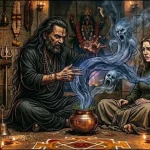
Demonic possession has long been a topic of fascination and terror across cultures and religions. From ancient folklore to contemporary horror stories, demons have been depicted as malevolent entities that seek to invade and control human lives. To understand the phenomenon of demonic possession, we must first explore the nature of demons themselves, the different types that are said to exist, and the various influences they may exert on individuals.
I. Understanding Demons

Demons are often defined as supernatural beings that embody evil and malevolence. Their characteristics and origins vary greatly across different belief systems, but common themes emerge. They are typically associated with chaos, temptation, and sin, often functioning as adversaries to divine figures and human virtue. In many traditions, demons are thought to be fallen angels, spirits of the dead, or other malevolent entities created by an evil force.
A. Historical Context
The concept of demons can be traced back to ancient civilizations. In Mesopotamia, for example, the Sumerians had a plethora of demon-like beings that were blamed for misfortune, illness, and misdeeds. Similarly, ancient Egyptians recognized hostile spirits that could invade the human realm and exert harmful influences.
In Christianity, demons are often seen as fallen angels who rebelled against God. The Book of Revelation details the ultimate defeat of these beings, but their influence persists as they are believed to seek vengeance against humanity. Various other religions, including Islam, Hinduism, and Buddhism, also present their own interpretations of demonic beings.
B. Types of Demons
Demons can be classified in many ways, depending on their attributes, origins, and the roles they play in various belief systems.
1. Fallen Angels
Fallen angels are typically seen as the most common type of demon in Christian theology. Lucifer, who became Satan, is the most notable example. These beings were once angels who chose to rebel against God and, as a result, were cast out of Heaven.
2. Earth Demons
Certain cultures believe in demons that are connected to the Earth. These spirits are often associated with natural disasters, droughts, and other calamities. They are thought to inhabit physical locations, such as mountains, rivers, and forests, and can influence the phenomena of nature.
3. Elemental Demons
Elemental demons are associated with the four classical elements: earth, air, fire, and water. Each category has its own set of characteristics and influences. For instance, fire demons may represent destruction but also transformation and passion, while water demons might symbolize fluidity and change.
4. Ghosts and Spirits
Some belief systems consider demons to be the restless spirits of the deceased. These spirits may seek vengeance or resolution for their untimely death and can possess the living.
5. Possession Demons
Possession demons are specifically believed to invade the minds and bodies of individuals, leading to behaviors that are often inexplicable or marked by violence. They can exert control over a person’s actions, thoughts, and emotions, leading to turmoil in the victim’s life.
C. Characteristics of Demons
Demons are often portrayed with distinct characteristics that contribute to their malevolent nature. Common traits include:
- Manipulative Nature: Demons are often depicted as deceptive and cunning, using lies and manipulation to achieve their goals.
- Physical Appearance: Many traditions describe demons as grotesque, monstrous beings, though they can also take on human forms to deceive their victims.
- Influence on Emotions: Demons are believed to feed on negative emotions such as fear, anger, and despair, amplifying them in their victims.
II. The Nature and Mechanics of Possession
Demonic possession is the phenomenon wherein a demon supposedly takes control of an individual’s body and mind. The degree of possession can vary, from mild influences to complete domination, often necessitating exorcism or spiritual intervention.
A. Signs of Possession

Various signs may indicate the presence of a demon within a person. Although these signs can be psychological in nature, they are often culturally understood as manifestations of possession. Common indications include:
- Altered Behavior: An individual may exhibit violent or unusual behavioral patterns that are out of character.
- Physical Changes: Unexplained marks, bruises, or a drastic change in physical appearance may occur.
- Abnormal Strength: Some accounts report that afflicted individuals demonstrate physical strength that exceeds their normal capabilities.
- Speaking in Tongues: The ability to speak languages unknown to the individual is often cited as an indicator of possession.
- Aversion to Sacred Objects: Demonstrating a repulsion to holy symbols, scriptures, or religious figures can also be a warning sign.
B. Psychological Explanations
Modern psychology often offers alternative explanations for what may be perceived as demonic possession. Mental health disorders, such as dissociative identity disorder, schizophrenia, and severe psychosis, can lead to behaviors resembling possession. The intersection of faith and mental health raises essential questions on how to approach individuals believed to be possessed, balancing spiritual beliefs with psychological understanding.
C. Cultural Influences on Possession
Cultural contexts heavily influence the interpretation and understanding of possession. Different cultures may have unique rituals, practices, and languages surrounding the concept of demons and possession. In some societies, exorcisms are performed as a means of restoring balance and health, while others may seek psychological intervention.
III. The Exorcism: A Response to Possession
Exorcism is a practice intended to rid an individual of a demon or evil spirit. This practice varies widely among different cultures and religions, with some employing elaborate rituals while others use simple prayers.
A. Methodologies
Common elements in exorcistic practices include:
- Prayers: Invocation of divine power is common in exorcisms, often utilizing specific scriptures or prayers believed to have protective properties.
- Holy Water and Sacred Objects: The use of blessed items, such as crucifixes or holy water, is a physical representation of the struggle against evil.
- Rituals and Incantations: Many traditions have established rituals and incantations, serving as a means to confront and cast out demons.
B. The Role of the Exorcist
Exorcists, who perform these rituals, are often seen as having special training or divine authority to combat demonic forces. Their belief in the power of the ritual is essential, as confidence and faith can influence the outcome of the exorcism.
C. Case Studies
While many exorcisms are anecdotal, there are notable case studies that have been documented, stirring controversy and intrigue. The story of Anneliese Michel, a young woman who underwent a series of exorcisms in the 1970s, is widely cited. Her tragic fate raises questions regarding the balance between faith and mental health treatment.
IV. The Influence of Demons Beyond Possession
Demons are not solely limited to possession; their influence extends into various aspects of life, affecting individuals and societies in multifaceted ways.
A. Temptation and Sin
Demons are often viewed as instigators of temptation, leading individuals to sin and moral corruption. Many believe they whisper harmful thoughts, encourage wrongdoing, or exploit weaknesses to lead one away from virtue.
B. Illness and Misfortune
Throughout history, demons have been associated with physical and mental ailments, as well as personal and communal misfortunes. Diseases often became equivalents of demonic attacks, and healing was sought through both spiritual and physical means.
C. Influence in Popular Culture
Demons have permeated popular culture, manifesting in literature, film, and art. This representation fuels fascination and fear, often oversimplifying complex beliefs and realities. Movies such as “The Exorcist” and literature like Dante’s “Inferno” have popularized certain demon myths while straying from traditional beliefs.
V. Conclusion
The nature of demons and the influence they exert on individuals and societies remain enigmatic and complex. From historical contexts to modern interpretations, demons have been imbued with varying significances and characteristics.
Understanding their influence on phenomena like possession involves a careful consideration of psychological explanations, cultural contexts, and the spiritual dimension. Exploring demonic possession is not only an inquiry into the supernatural but also a reflection of our beliefs about human nature, morality, and the struggles we face in our lives.
As we navigate the myriad ways demons are portrayed and perceived, we gain insight into our own fears and the human condition. Whether seen as real entities or symbolic representations of internal struggles, demons serve as fascinating subjects for inquiry into faith, psychology, and culture.
This overview serves as a foundation for further exploration into the rich tapestry of beliefs and interpretations surrounding demons and possession globally. Delving into personal accounts, theological debates, and psychological perspectives can shed even more light on this enduring subject. If you have any questions or require further details on specific aspects, feel free to ask!