

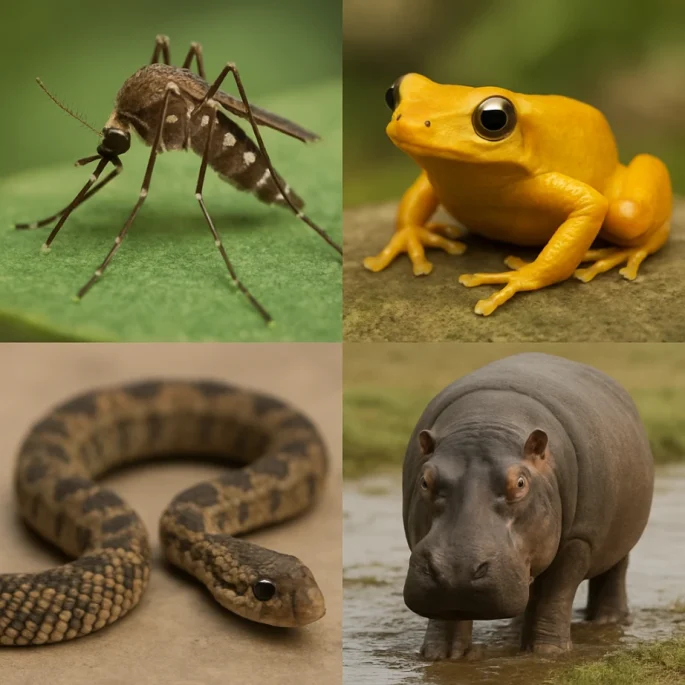
What Is the Most Dangerous Animal in the World?
When you close your eyes and picture the most dangerous animal in the world, your mind likely conjures up images of roaring lions, massive bears, or stealthy sharks. Human instinct trains us to fear large carnivores with sharp teeth and razor-like claws. However, if you were to ask biologists what the deadliest creature on the planet is, their answer would completely turn this assumption on its head.
The reality of wildlife danger is often vastly different from Hollywood portrayals. To truly understand global threats, we must look beyond the screen and dive into the fascinating, and sometimes terrifying, world of animal biology and behavior. This guide explores the top 10 deadliest animals, clarifying what the most feared animal on earth is, versus what animal kills the most humans.
The Tiny Assassin: The True Number One Threat
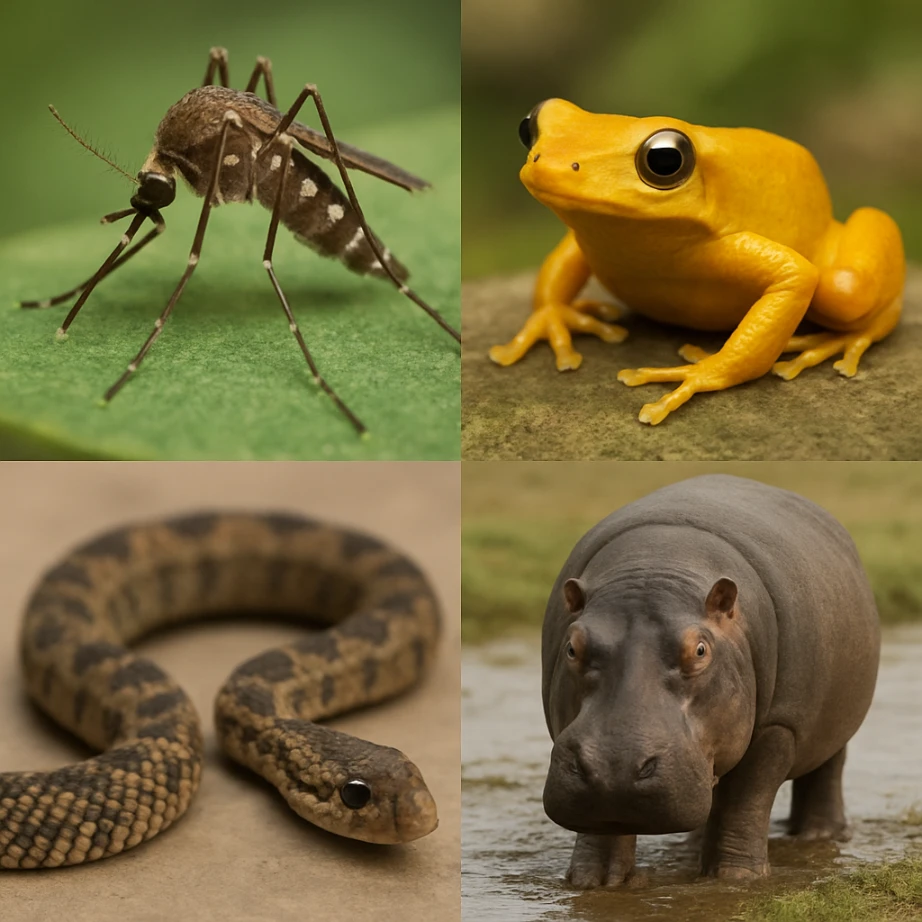
When assembling a list of the top 10 deadliest animals, the undisputed champion isn’t a massive apex predator; it’s an insect. If you are wondering which insect kills the most people per year, or more broadly, what animal kills the most humans, the answer is the mosquito.
The mosquito is officially the 1st most dangerous animal in the world. These tiny pests act as vectors for some of the most devastating diseases known to humanity, including malaria, dengue fever, Zika virus, and yellow fever.
According to World Health Organization, animal-related death statistics, mosquitoes are responsible for over 700,000 human deaths annually. This gives them the highest annual human mortality rate by species, dwarfing the statistics of every other animal combined (excluding humans themselves).
Protecting Yourself in High-Risk Zones
Because the threat is so pervasive, preventing mosquito-borne diseases in tropical regions is a critical skill for any traveler. Here are a few actionable tips:
- Use EPA-registered repellents: Look for active ingredients like DEET, Picaridin, or Oil of Lemon Eucalyptus.
- Treat your gear: Use permethrin on your clothing, tents, and netting.
- Eliminate standing water: Mosquitoes need as little as a bottle cap of stagnant water to breed.
- Time your outings: Many disease-carrying mosquitoes are most active at dawn and dusk.
Toxic Terrors: Chemical Warfare in Nature
When discussing dangerous creatures, it is crucial to get our terminology right. You will often hear the terms “poisonous” and “venomous” used interchangeably, but they mean very different things.
Having venomous vs poisonous animals explained is simple: if you bite it and you die, it is venomous. If it bites you and you die, it is venomous.
The Most Poisonous Animal in the World
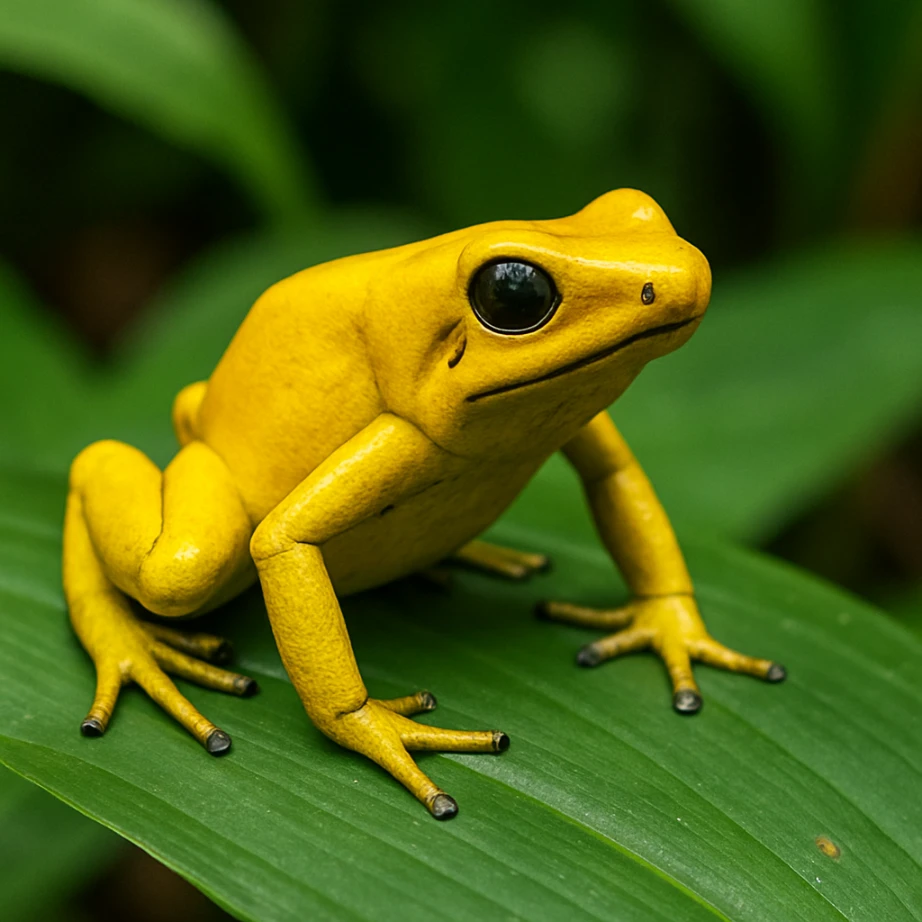
The title of the most poisonous animal in the world goes to the incredibly vibrant, yet deadly, Golden Poison Dart Frog (Phyllobates terribilis), found on the Pacific coast of Colombia. A single frog, measuring no more than two inches, contains enough batrachotoxin in its skin glands to kill roughly 10 grown human beings. Fortunately, they only release this toxin when threatened or consumed, meaning you are perfectly safe as long as you don’t touch or eat them.
Slithering Killers: The Venomous Heavyweights
When it comes to venomous creatures, snakes naturally dominate the conversation. However, not all snake venoms are created equal. Biologists often debate the inland taipan vs. the king cobra venom potency.
The Inland Taipan, native to Australia, holds the title for the most toxic venom of any land snake. A single bite contains enough lethality to kill 100 adult humans. On the other hand, the King Cobra might have slightly less potent venom, but it delivers it in massive, terrifying quantities, making it equally lethal in a real-world encounter.
A major danger of these bites lies in the neurotoxic venom effects on the human nervous system. Unlike hemotoxins, which destroy tissue and blood, neurotoxins attack the brain and nerves. This quickly leads to muscle paralysis, blurred vision, and ultimately, respiratory failure as the victim’s diaphragm ceases to function.
First Aid Treatment for Lethal Snake Bites: If you or a companion is bitten by a venomous snake, immediate and correct action is the difference between life and death:
- Stay calm and still: Elevated heart rates pump the venom through the body faster.
- Immobilize the limb: Keep the bitten area at or slightly below heart level.
- Apply a pressure immobilization bandage: Wrap the limb firmly (but not tight enough to cut off circulation) to slow the lymphatic spread of the venom.
- Seek immediate medical help: Anti-venom is the only definitive cure. Note: Never cut the wound, suck out the venom, or apply a tourniquet. These outdated methods cause far more harm than good.
The Giants: Brute Strength and Territorial Aggression
If we move away from tiny insects and chemical toxins, we enter the realm of the heavyweights. When people ask, “What is the most feared animal on earth ?”, they usually picture large carnivores. The tiger, the grizzly bear, or the lion often takes the crown for the most fearsome animal. Yet, the statistics tell a completely different story about where the true danger lies.
The Surprising Danger of Herbivores
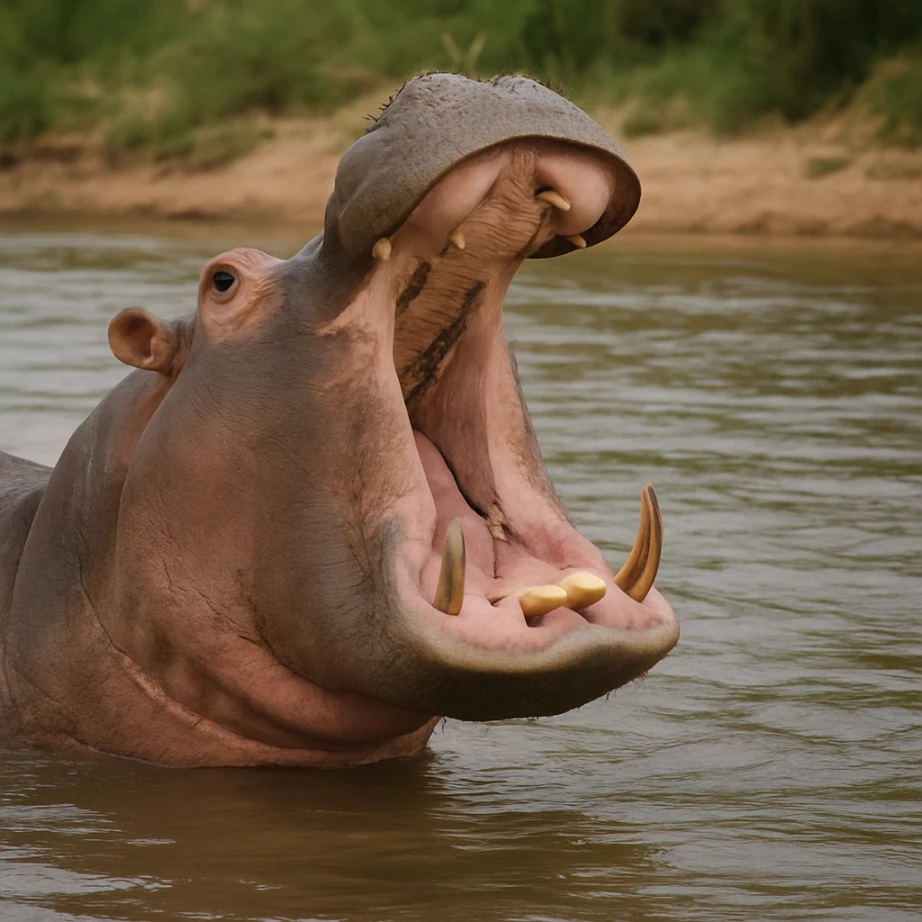
Understanding large mammal defense mechanisms and human safety is vital for anyone exploring the African continent. The hippopotamus is often perceived as a slow, lumbering, and somewhat comical herbivore. In reality, the hippo is incredibly aggressive, fiercely territorial, and responsible for an estimated 500 human deaths per year in Africa.
Hippos possess massive jaws capable of snapping a canoe in half, and despite their weight, they can run at speeds up to 30 km/h (19 mph) on land.
How to survive a hippopotamus attack in the wild:
- Keep your distance: Never get between a hippo and the water, which is their haven.
- Listen for warnings: Yawning is not a sign of sleepiness for a hippo; it is a display of its massive tusks and a warning to back off.
- Run for cover: If charged on land, do not attempt to play dead. Run in a zigzag pattern and immediately climb a tree or find an obstacle like a large termite mound to put between yourself and the animal.
The Truth About Apex Predators
While large herbivores cause the most fatalities, predators still command our respect. Interestingly, the big cats we fear the most aren’t the most efficient hunters. If you look at apex predators with the highest hunting success rates, the African Wild Dog boasts a staggering 85% success rate, relying on incredible stamina to run their prey to exhaustion. By comparison, lions succeed in only about 25% of their hunts. However, wild dogs generally avoid humans, proving that hunting efficiency does not equate to a threat to mankind.
Terrors of the Deep: Aquatic Threats
Coastal waters and murky rivers harbor their own unique threats. The deadliest aquatic creatures found in coastal waters often lurk completely unseen.
The Box Jellyfish, found predominantly in the Indo-Pacific waters surrounding Australia, is widely considered the most venomous marine creature on earth. Its tentacles are covered in millions of microscopic nematocysts (stinging cells) that instantly inject venom upon contact. The sting is so agonizing that victims frequently go into shock and drown before reaching the shore.
When it comes to marine predators with teeth, public perception is heavily skewed by cinema. Let’s compare saltwater crocodile vs great white shark mortality. Because of blockbuster movies, millions are terrified of sharks. Yet, unprovoked shark attacks are incredibly rare, with sharks causing an average of fewer than 10 global fatalities a year.
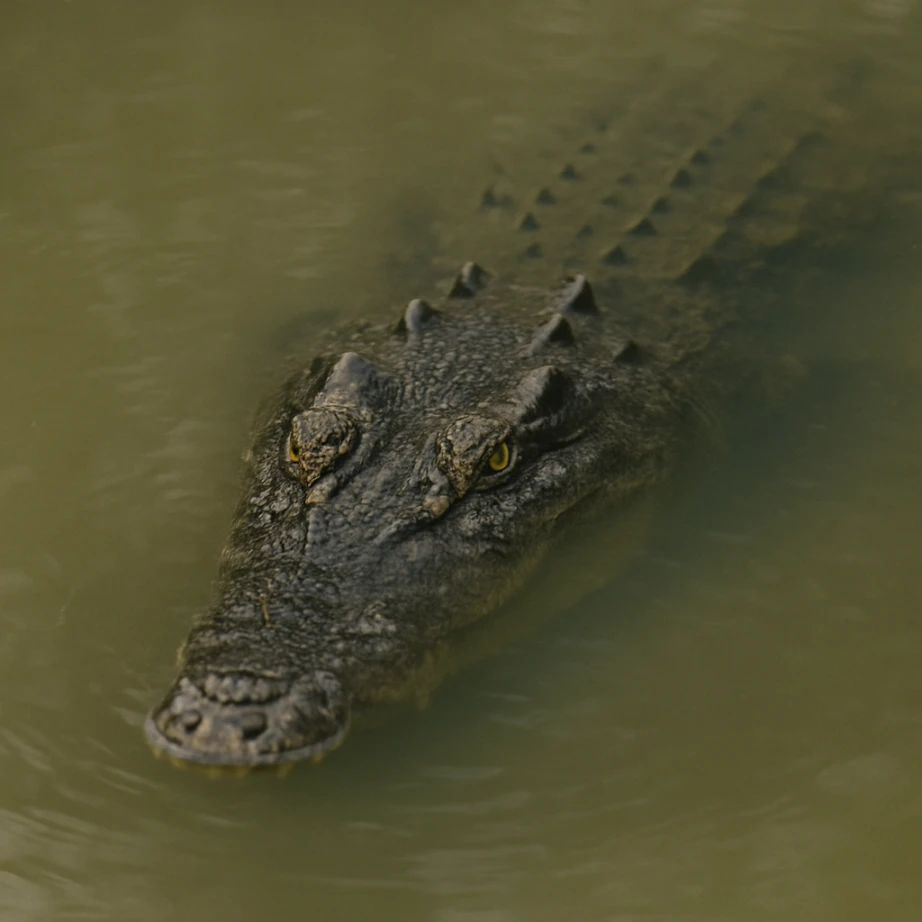
In stark contrast, the Saltwater Crocodile—the largest living reptile—is an aggressive, ambush predator that actively views humans as a food source. “Salties” are responsible for hundreds of fatalities annually across Southeast Asia and Australia. When evaluating true threats, the crocodile is infinitely more dangerous than the great white shark.
Staying Safe: Practical Tips for Wildlife Encounters
Whether you are an avid adventurer or a casual tourist, safety should always be your top priority. Understanding geographical hotspots for dangerous wildlife can help you prepare. For instance, traveling to Sub-Saharan Africa requires vigilance regarding hippos and mosquitoes, while a trip to the Australian Outback means preparing for encounters with venomous snakes and marine stingers.
Here are essential guidelines for avoiding aggressive wildlife encounters while camping:
- Maintain a clean campsite: Never store food or heavily scented items in your tent. Keep them in bear-proof containers or suspended from trees, depending on local regulations.
- Make noise on the trail: Most animals want to avoid you as much as you want to avoid them. Talking loudly or wearing a bear bell prevents you from startling a defensive animal.
- Respect the space: Use a zoom lens for your wildlife photography. If an animal alters its behavior because of your presence, you are too close.
- Do your research: Always consult local park rangers about recent predator sightings or insect-borne disease outbreaks in the area before setting up camp.
The Bottom Line
Exploring the natural world is one of life’s greatest privileges, but it requires respect and education. The title of the most dangerous animal in the world doesn’t belong to a roaring monster of the deep, but rather to the tiny, disease-carrying mosquito.
By understanding the true statistics of wildlife danger—from respecting the territorial boundaries of a hippopotamus to knowing how to treat a neurotoxic snake bite—we can coexist safely with nature’s most formidable creatures. The wild is indeed untamed, but with the right knowledge, preparation, and respect, you can experience its breathtaking beauty without becoming a statistic.
Q&A
Question: Why are mosquitoes considered the most dangerous animals in the world, and how can travelers reduce their risk?
Short answer: Because they transmit deadly diseases like malaria, dengue, Zika, and yellow fever, mosquitoes cause over 700,000 human deaths annually—more than any other animal (excluding humans). To reduce risk, use EPA-registered repellents (DEET, Picaridin, or Oil of Lemon Eucalyptus), treat clothing and gear with permethrin, eliminate standing water, and avoid peak biting times at dawn and dusk.
Question: What’s the difference between “poisonous” and “venomous,” and which animals hold the extreme titles?
Short answer: If you bite it and die, it’s poisonous; if it bites you and you die, it’s venomous. The most poisonous animal is the Golden Poison Dart Frog, whose skin toxins can kill roughly 10 adults. Among snakes, the Inland Taipan has the most toxic land-snake venom (a bite could kill 100 adults), while the King Cobra delivers large volumes of venom, making it equally lethal in real-world encounters. Many such venoms are neurotoxic, causing paralysis and potentially respiratory failure.
Question: What immediate first aid should you perform after a venomous snakebite?
Short answer: Stay calm and keep movement to a minimum; immobilize the bitten limb at or slightly below heart level; apply a firm (not constrictive) pressure immobilization bandage to slow venom spread; and seek urgent medical care for antivenom. Do not cut the wound, suck out venom, or apply a tourniquet—these do more harm than good.
Question: Are hippos really more dangerous to people than big cats, and how can you stay safe around them?
Short answer: Yes. Despite being herbivores, hippos are highly aggressive and territorial, causing an estimated 500 human deaths per year in Africa. Stay safe by keeping your distance (never get between a hippo and the water), recognizing that “yawning” is a warning display, and if charged on land, running in a zigzag and putting a large obstacle (or a tree) between you and the animal.
Question: Which is more dangerous to humans: sharks or saltwater crocodiles—and what about box jellyfish?
Short answer: Unprovoked shark attacks cause fewer than 10 deaths worldwide each year, while saltwater crocodiles are responsible for hundreds of annual fatalities and actively view humans as prey. In coastal Indo-Pacific waters, box jellyfish are another major threat: they’re considered the most venomous marine creatures, and their stings can cause shock and drowning within minutes.