


Unraveling the World’s Most Mysterious Places
Think about the last time you saw a wrapped gift with your name on it. You didn’t just want to know what was inside; you felt a physical tug in your chest. According to neuroscientists, that restless itch is a biological urge as primal as physical hunger or thirst. It perfectly explains the psychological appeal of the unknown and why an ancient, fog-shrouded ruin holds such power over our imaginations.
Psychologists call this feeling the “Information Gap”—the shaky bridge suspended between what we currently know and what we desperately want to discover. As you cautiously step onto that bridge, your biological dopamine reward system immediately engages. Research shows this gap creates a form of cognitive deprivation. Your brain actually releases a surge of dopamine, not when you finally unearth the artifact, but while you are actively chasing the secret.
This chemical response completely transforms our view of the unsolved. Rather than seeing a dark cave as a frustrating puzzle, we can recognize true mystery as a profound psychological state that historically drove human survival and growth. By embracing how our minds process these gaps, we uncover why humans are drawn to secrets and what compels us to explore the world’s most mysterious places.
From Stonehenge to the Wow! Signal: Categorizing Unexplained Phenomena Throughout History
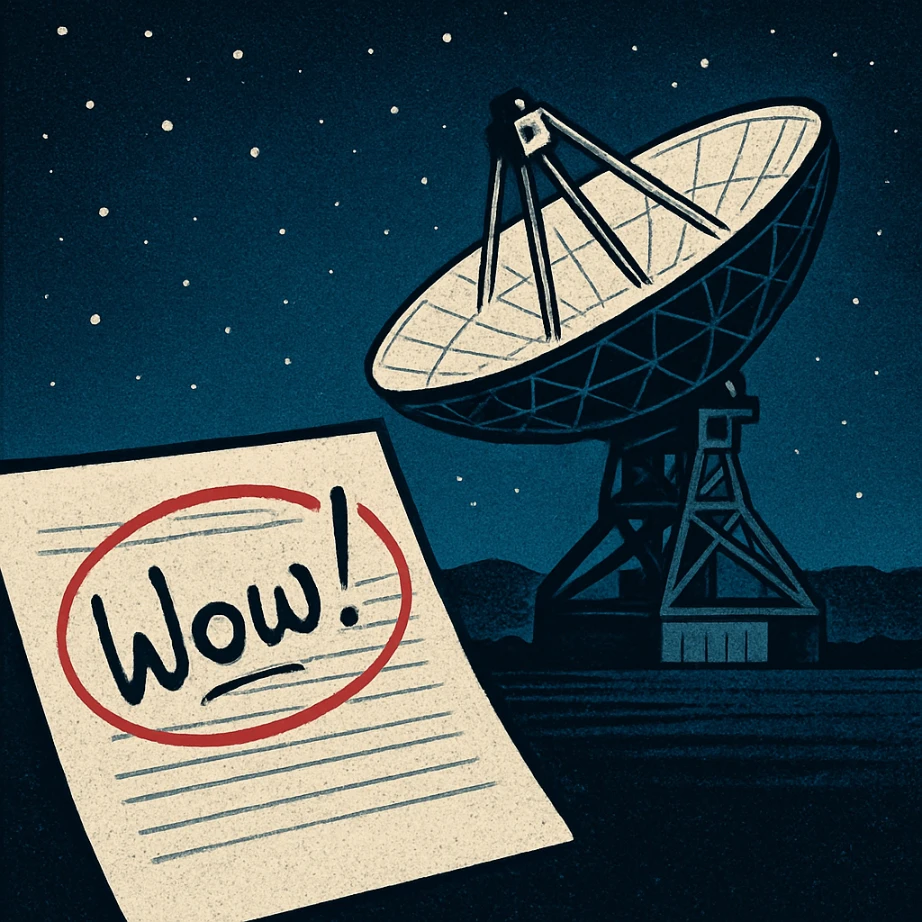
In 1977, a radio telescope recorded a 72-second space transmission so bizarre that an astronomer famously circled the data in red, writing one word: Wow! Decades later, its origin remains completely unknown. This event perfectly highlights how modern technology often delivers brilliant data without actual answers, leaving us staring directly at a profound anomaly.
Separating these captivating events from simple curiosities requires understanding the difference between a puzzle and a true mystery. Puzzles are like lost car keys; you know the answer exists, and you need to find the missing piece. Conversely, unexplained phenomena throughout history are systemic mysteries. They don’t just lack a missing piece; they challenge the fundamental rules of the entire game we are playing.
When identifying patterns in unexplained anomalies, scientists look for a strong “signal-to-noise ratio”—meaning they must isolate a genuinely strange event (the signal) from everyday background data (the noise). The strongest historical signals always share three specific traits: they lack clear origins, defy our current logic, and boldly resist easy categorization.
Every enduring anomaly acts as a mysterious, incredible terminator, much like the astronomical line dividing a planet’s known daylight from total darkness. These borders halt our current knowledge, but facing them doesn’t mean we must surrender to wild theories. To safely navigate these mysterious edges without getting lost in fiction, we must learn how to evaluate the unknown with sharp, critical logic.
The Skeptics Toolkit: Investigating Paranormal Claims and Urban Legends with Logic
Imagine glancing at a jacket in a dark room and freezing because it resembles a towering figure. Your brain is experiencing pareidolia, a hardwired survival mechanism forcing us to recognize familiar patterns—especially faces—in random shapes. This biological quirk offers powerful scientific explanations for supernatural events, revealing how a trick of the light easily becomes a menacing ghost.
When deep belief collides with facts, cognitive dissonance—the mental discomfort of holding conflicting ideas—often makes us double down on the mystery. Consider the famous Loch Ness Monster: eager eyewitnesses frequently misidentify simple boat wakes as a prehistoric beast to validate their expectations. Investigating paranormal claims with logic doesn’t mean dismissing the wonder of the unknown; it simply requires acknowledging how our pattern-seeking minds can creatively overwrite mundane reality.
Equipping yourself with reliable tools to verify folklore and myths helps prevent you from falling for these natural cognitive illusions. Run captivating tales through this three-step verification checklist:
- Source Check: Is the story a verified, firsthand account, or a distant rumor altered by time?
- Physical Plausibility: Does the underlying claim break the fundamental laws of nature?
- Ockham’s Razor: What is the simplest answer? A blurry lake photo is usually just a floating log, not a secret dinosaur.
Applying these strict rules effectively separates modern urban legends from historical facts without losing the thrill of discovery. Filtering out psychological misdirections prepares us to tackle secrets intentionally hidden by humans—codes and ciphers explicitly designed to conceal the truth.
Cracking the Code: Practical Cryptography for Beginners and Deciphering Ancient Symbols
Passing a locked note to a friend, knowing anyone who intercepts it will only see gibberish, is the core of intentional secrecy. Mastering cryptography techniques for beginners unlocks these man-made mysteries. The most famous is the substitution cipher, used by Julius Caesar to protect military orders. Knowing how to solve cryptic puzzles like this transforms a meaningless jumble of letters into clear sentences.
Anyone can execute a basic Caesar Cipher shift for secret communication using this quick-start guide:
- Pick a key: Choose a secret number (e.g., 3).
- Shift the alphabet: Slide every letter down by that number (A becomes D).
- Encrypt: Swap your real letters with the shifted ones.
- Reverse: The receiver simply shifts the alphabet backward to decode.
What happens when you intercept a code but don’t know the key? Cryptographers use “Frequency Analysis” for decoding hidden messages in literature or wartime texts. In English, ‘E’ is the most common letter. If a coded text constantly uses ‘X’, ‘X’ is likely a disguised ‘E’. Finding that pattern builds a bridge from the unknown back to the known.
Archaeologists face a different challenge when deciphering ancient symbols and codes. Experts in epigraphy—the study of inscriptions—look for recurring visual patterns to translate lost languages. They frequently recognize three common symbols: the sun disc (representing divinity), the water zigzag (signifying life), and the stylized eye (symbolizing protection). Unlocking these carved stones triggers the exact same dopamine rush that draws us to fictional crimes, explaining our deep fascination with classic ‘whodunnits’ and mysterious heroines.
The Enigma Machine: Why We Love ‘Whodunnits’ and Mysterious Heroines
Curling up on the couch for a tense detective show feels surprisingly relaxing, which makes zero logical sense. If you want to understand why humans are drawn to secrets, look to your brain’s reward system. When a fictional investigator stalks down a dark hallway, we experience a “controlled suspense response.” This biological trick gives us a safe psychological shiver—the dopamine rush of survival, enjoyed while comfortably wrapped in a blanket without any actual threat.
Masterful storytellers manipulate this safe fear by deliberately stringing us along with false clues. You have likely encountered the “Red Herring,” a narrative technique designed to distract you from the truth. Think of the shady neighbor in a thriller who looks incredibly guilty but is just socially awkward. That false trail acts as a shaky bridge between what we know and what we desperately want to find out, keeping our curiosity hungry.
Beyond the plot, the people navigating these stories must also strike a delicate balance. Consider the appeal of a mysterious heroine x—a character whose motives are hidden but whose actions remain entirely consistent. That consistency is exactly what makes a story truly enigmatic rather than just frustrating or confusing. A poorly written character acts randomly to hide secrets, but a genuinely mysterious one drops puzzle pieces that perfectly lock together at the end.
These fictional puzzles grant us a deeply satisfying closure that reality rarely provides. While we practice hunting for clues in novels because we naturally crave answers, our real universe is beautifully messy. Stepping away from neatly tied conclusions prepares us to embrace the unsolvable and stay fiercely curious.

Embracing the Wow!: How to Live with the Unsolvable and Stay Curious
The unknown is not merely a frustrating puzzle. Its psychological appeal—that biological tug pulling us toward discovery—is a powerful compass. This awareness allows you to appreciate unexplained phenomena throughout history without getting lost in the weeds. The key is separating healthy scientific inquiry from the trap of needing an immediate answer, which often leads people down dangerous rabbit holes.
To keep that thrill of discovery alive while staying grounded, try this weekly curiosity plan:
- Read one debunking: Spend ten minutes researching the facts behind popular conspiracy theories to see how science solves complex problems.
- Learn one code: Challenge your brain’s reward system by solving a basic cipher or logic puzzle.
- Visit one local mystery spot: Take a walk to a historical landmark near you and let yourself wonder about its past.
Harnessing the mechanics of curiosity allows you to explore safely. Each time you investigate a new secret, you build confidence in your ability to simply say, “I don’t know yet.” A world with every answer neatly categorized would be a remarkably dull place. By embracing the mystery, you transform the unknown from a source of fear into a beautiful opportunity for growth.