


Buddhism is fundamentally a pragmatic, diagnostic framework designed to resolve the core dilemma of human existence. Rather than operating on dogmatic decrees, the historical Buddha functioned as a spiritual physician—identifying a universal ailment, diagnosing its origin, assuring a cure, and prescribing a precise psychological treatment.
For practitioners and scholars alike, identifying what is the cause of suffering in Buddhism is the foundational step toward spiritual awakening. While casual observers often assume the philosophy is inherently pessimistic, a closer look at the Four Noble Truths (Cattari Ariyasaccani) reveals a highly optimistic pathway to complete mental liberation (Nirvana).
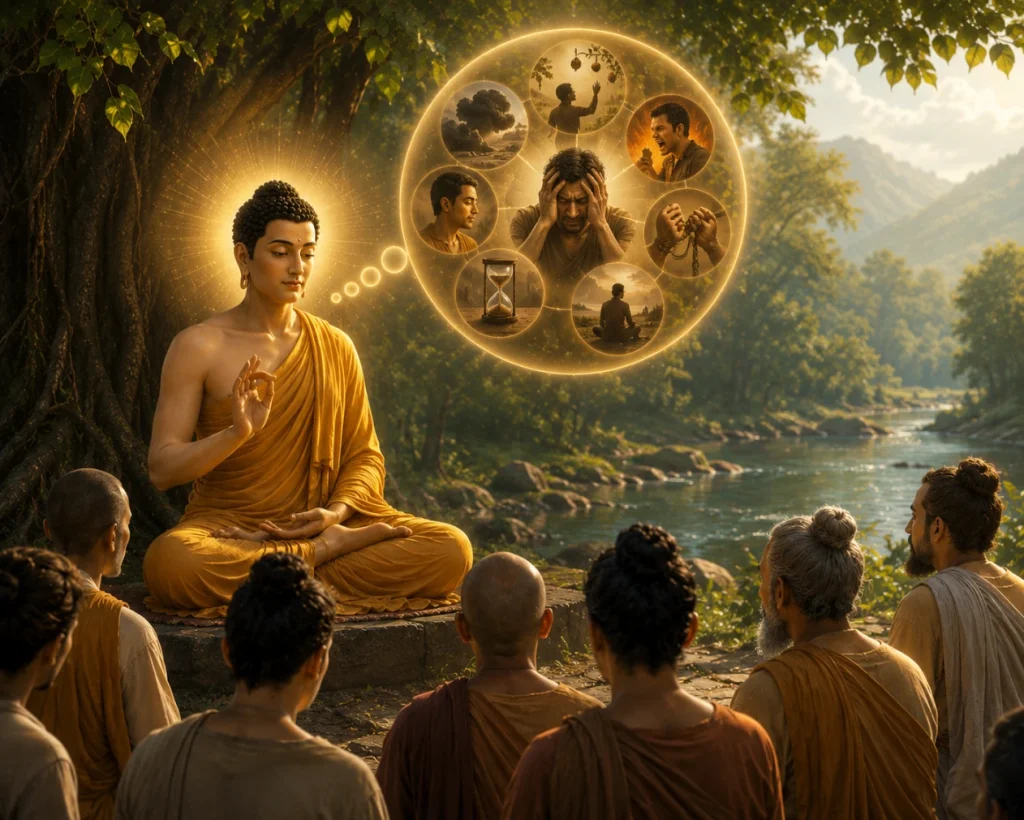
The Four Noble Truths: The Medical Chart of the Soul
The entire framework of Buddhist thought is built sequentially upon four foundational premises:
[1. Dukkha: The Symptom] ➔ [2. Samudaya: The Diagnosis]
                                      ⬇
[4. Magga: The Treatment] ⮠ [3. Nirodha: The Prognosis]
- The Truth of Suffering (Dukkha): The baseline symptom. Life contains inescapable physical and psychological friction.
- The Truth of the Cause of Suffering (Samudaya): The underlying diagnosis that addresses what is the cause of suffering in Buddhism.
- The Truth of the Cessation of Suffering (Nirodha): The hopeful prognosis. It is entirely possible to cure the ailment and end the cycle of distress.
- The Truth of the Path (Magga): The prescribed treatment plan. The structured Eightfold Path serves as the step-by-step practical regimen to achieve full recovery.
Deconstructing Dukkha: The Three Layers of Friction
To accurately diagnose what is the cause of suffering in Buddhism, one must first understand what Dukkha actually means. Translating Dukkha simply as “suffering” is a linguistic oversimplification. In Pali, it refers to a bumpy, off-center wheel axle that creates a jarring ride. It points to a deep-seated, persistent sense of unsatisfactoriness.
Theravada and Mahayana traditions categorize this friction into three distinct layers:
1. Ordinary Pain (Dukkha-dukkha)
This represents overt physical and emotional suffering. It includes acute pain, illness, injury, old age, grief, and the distress of physical dying.
2. Suffering Due to Impermanence (Viparinama-dukkha)
This friction arises from the transient nature of joy. When we experience pleasure, we immediately spark anxiety over its inevitable conclusion. Because all conditioned phenomena are subject to change (Anicca), clinging to a fleeting moment guarantees distress when it shifts.
3. Existential Unsatisfactoriness (Sankhara-dukkha)
The deepest layer of Dukkha. This is a background vulnerability—a subtle, ambient angst tied directly to the fragile, unstable nature of conditioned existence itself. It is the realization that no earthly achievement, object, or relationship can ever offer permanent, unshakeable fulfillment.
Samudaya: Exploring What Is the Cause of Suffering in Buddhism
The Second Noble Truth locates the origin of human distress inside our own mental habits, rather than blaming external events, fate, or divine intervention. When asking what is the cause of suffering in Buddhism, the answer is driven by an interlocking triad known as the Three Unwholesome Roots (Akusala-mula):
1. Craving (Tanha / Trishna)
Tanha translates literally to “thirst.” It is an unquenchable, compulsive urge that manifests in three specific psychological drives:
- Craving for Sensory Pleasure (Kama-tanha): The endless, addictive chase for pleasant sights, sounds, tastes, touches, and mental stimuli.
- Craving for Becoming (Bhava-tanha): The ego-driven desire to accumulate status, solidify an identity, achieve fame, or ensure eternal personal existence.
- Craving for Non-Becoming (Vibhava-tanha): The destructive impulse to escape pain through dynamic avoidance, annihilation, or substance abuse.
2. Ignorance (Avidya / Avijja)
Ignorance is the root condition that allows craving to fester. It is a fundamental misperception of reality. The human mind naturally looks at the world and assumes things are permanent, independent, and capable of providing lasting happiness. Buddhism asserts that reality is actually characterized by the Three Marks of Existence: Impermanence (Anicca), Unsatisfactoriness (Dukkha), and Non-Self (Anatta—the reality that there is no fixed, unchanging “I”).
3. Attachment (Upadana)
When Avidya (ignorance) distorts our view and Tanha (craving) sparks a thirst, the mind locks into Upadana (clinging). We desperately grasp onto physical objects, material wealth, specific people, comforting routines, and rigid ideological views (Ditthi). When the natural law of change threatens these attachments, intense anxiety and suffering immediately follow.
The Structural Framework: Dependent Origination (Paticcasamuppada)
To demonstrate exactly how ignorance leads to distress, Buddhist philosophy utilizes a twelve-part chain of cause and effect known as Dependent Origination. This framework maps out precisely how the mind builds suffering link by link.
| Link in the Chain | Pali / Sanskrit Term | Core Meaning |
| 1. Primary Blindness | Avijja / Avidya | Spiritual ignorance of the true nature of reality. |
| 2. Karmic Formations | Sankhara | Volitional actions and mental habits shaped by ignorance. |
| 3. Consciousness | Vinnana | The baseline awareness that animates a new life. |
| 4. Mind and Matter | Nama-rupa | The biological formation of mental and physical structures. |
| 5. The Six Senses | Salayatana | The development of eyes, ears, nose, tongue, body, and mind. |
| 6. Sensory Contact | Phassa | The meeting of a sense organ with an external object. |
| 7. Sensation / Feeling | Vedana | The immediate labeling of contact as pleasant, unpleasant, or neutral. |
| 8. Craving | Tanha | The automatic instinctual “thirst” to run toward pleasure or away from pain. |
| 9. Clinging | Upadana | The escalation of craving into deep psychological attachment. |
| 10. Becoming | Bhava | The consolidation of a rigid, defensive identity and ego structure. |
| 11. Birth | Jati | The physical manifestation of life or the birth of a new ego reaction. |
| 12. Decay and Death | Jaramarana | The inevitable arrival of old age, grief, lamentation, and Dukkha. |
The Eightfold Path: The Practical Countermeasure
To dismantle this chain and completely resolve what is the cause of suffering in Buddhism, the system prescribes the Noble Eightfold Path (Ariya Atthangika Magga). This path is divided into three core operational divisions:
Division I: Wisdom (Panna)
- Right View (Samma Ditthi): Deeply internalizing the Four Noble Truths and the laws of karma.
- Right Intention (Samma Sankappa): Dedicating oneself to emotional harmlessness, renunciation of ill-will, and active compassion.
Division II: Ethical Conduct (Sila)
- Right Speech (Samma Vaca): Abstaining from lying, harsh words, divisive gossip, and idle chatter.
- Right Action (Samma Kammanta): Behaving ethically by avoiding killing, stealing, and sexual misconduct.
- Right Livelihood (Samma Ajiva): Earning a living through professions that do not inflict systemic harm on other sentient beings.
Division III: Mental Discipline (Samadhi)
- Right Effort (Samma Vayama): Actively preventing unwholesome mental states while actively nurturing positive, clear ones.
- Right Mindfulness (Samma Sati): Maintaining constant, anchor-like awareness of the body, feelings, mind states, and thoughts.
- Right Concentration (Samma Samadhi): Developing single-pointed mental focus through advanced meditative absorption (Jhana).
Frequently Asked Questions (FAQ)
What is the cause of suffering in Buddhism according to the second noble truth?
According to the Second Noble Truth (Samudaya), the core cause of suffering is Tanha (craving, thirst, or attachment). This unquenchable desire manifests as a constant demand for reality to be different than it currently is—whether that means chasing sensory pleasures, clinging to a permanent sense of self, or desperately trying to avoid unavoidable pain.
Does finding the root cause of suffering mean all desires are bad?
No. Buddhist psychology makes a vital distinction between Tanha (unwholesome, obsessive craving driven by ignorance) and Chanda (a healthy, neutral desire to act). Wanting to eat nutritious food, take care of your family, practice meditation, or help others escape suffering are positive desires (Chanda) that act as essential fuel along the path to liberation.
If life is inherently full of suffering, isn’t Buddhism fatalistic?
Not at all. Labeling Buddhism as fatalistic or pessimistic misses the second half of the equation. While the framework begins by diagnosing the reality of Dukkha, it immediately pivots to Nirodha—the definitive guarantee that suffering can be completely cured. It functions exactly like a medical prognosis: identifying a disease is simply the prerequisite step to administering an absolute cure.
Disclaimer: This guide is intended strictly for educational, historical, and philosophical analysis purposes, exploring the classical texts and traditions of Buddhist thought.