

Mention the word “Tantra” in Western society, and the mind almost instantly jumps to sensationalized pop-culture associations regarding alternative intimacy. However, when exploring the authentic question of what is tantra yoga, we uncover an expansive, sophisticated, and ancient spiritual science that has very little to do with modern media distortions.
Derived from the Sanskrit root tan, meaning “to expand” or “to weave,” Tantra Yoga is an integrated, holistic framework designed to expand human consciousness. Rather than seeking enlightenment by withdrawing from the physical world, Tantra teaches practitioners to weave together their physical, emotional, and spiritual realities to achieve absolute liberation (Moksha).
This comprehensive guide serves to clarify the true history, foundational energetic mechanics, and practical methodologies of this profound spiritual path.
The Historical Origins of Tantric Science
To fully comprehend what tantra yoga is, one must trace its development back to ancient India.
[Pre-Vedic Roots / Indigenous Shamanism] ➔ [Formalization of Agama Texts (5th Century CE)]
                                                            ⬇
[Modern Neo-Tantra Metamorphosis] ⮠ [Integration into Classical Hatha Yoga Systems]
Tantra emerged as a distinct spiritual movement around the 5th century CE, developing alongside and heavily influencing both Hinduism and Buddhism. While classical Vedic paths often prescribed asceticism—withdrawing into the forest, fasting, and denying the flesh—Tantra arrived as a radical, democratic counter-movement.
The ancient Tantric sages argued that because the universe is an expression of the Divine, the physical body and the material world are not obstacles to be overcome, but sacred instruments to be utilized for spiritual awakening.
Core Metaphysical Principles of Tantra
Authentic Tantra Yoga operates on an intricate energetic map of reality, governed by three primary pillars:
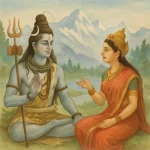
1. The Dynamic Polarity: Shiva and Shakti
Tantra views the universe as a continuous dance between two primordial cosmic forces:
- Shiva (The Masculine Principle): Unchanging, formless, pure consciousness.
- Shakti (The Feminine Principle): Dynamic, creative cosmic energy that gives birth to the physical universe.
The ultimate objective of the practice is to harmonize these dualities within the practitioner’s own body, reuniting raw energy with higher awareness.
2. The Awakening of Kundalini
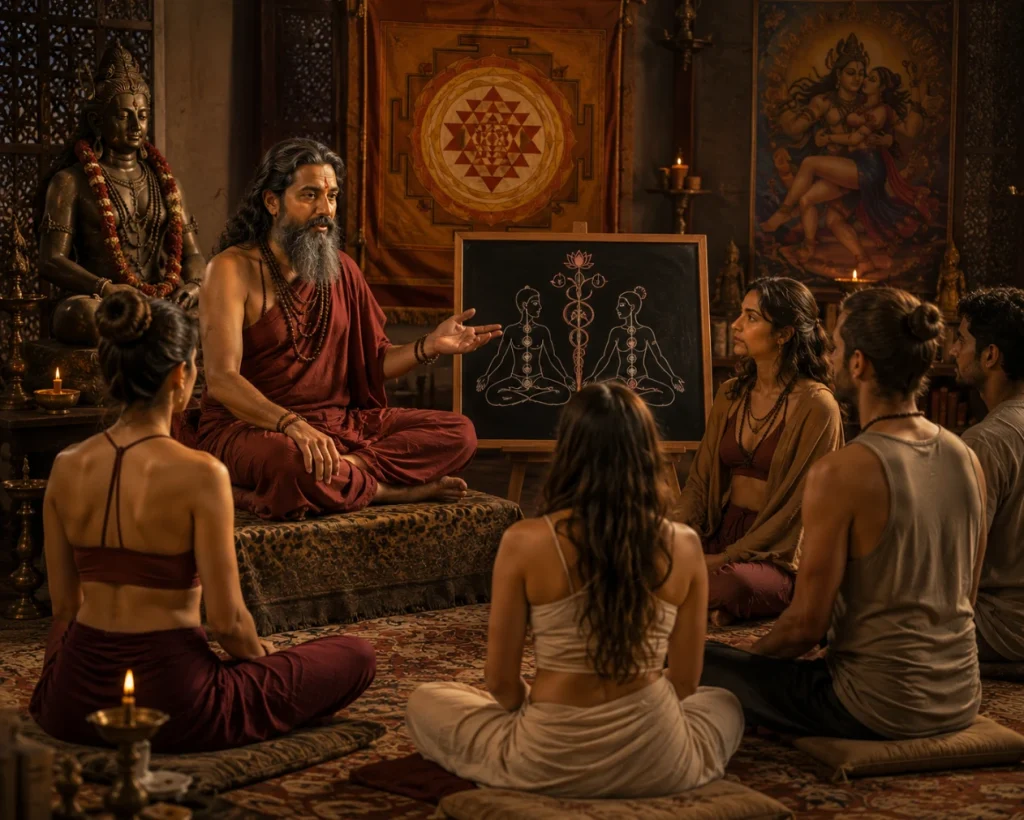
Tantra Yoga posits that a dormant, evolutionary spiritual force known as Kundalini Shakti lies coiled at the base of the human spine (the Muladhara chakra). Through systematic spiritual practices, practitioners awaken and guide this energy upward through the central energetic channel (Sushumna Nadi), piercing the energetic vortexes (Chakras) until it merges with pure consciousness at the crown of the head (Saharara).
3. The Sacred Matrix of Reality
Unlike dualistic philosophies that label the material world as an illusion (Maya) to be escaped, Tantra views the universe as the living body of the Divine. Tantra treats every emotion, sensory experience, and physical object as a potential gateway to cosmic presence.
Classical Practices vs. Modern Variations
The classical path of Tantra Yoga requires multi-layered structural mental and vocal disciplines, far contrasting the casual workshops found today.
| Spiritual Discipline | Classical Sanskrit Term | Primary Purpose in Tantra Yoga |
| Sacred Sound Vibration | Mantra | Using specific vocal seed syllables (Bijhas) to shift the brain’s electromagnetic frequency. |
| Sacred Geometry | Yantra / Mandala | Utilizing complex geometric patterns as visual focal points for intense meditative absorption. |
| Energetic Gestures | Mudra | Locking and directing the flow of life-force energy (Prana) through precise hand configurations. |
| Ritual Deconstruction | Puja | Creating structured, sacred spaces to externalize internal cosmic realities. |
| Conscious Breathwork | Pranayama | Regulating the breath (such as Nadi Shodhana) to purify the nervous system for energy movement. |
Direct Distinctions: Tantra vs. Standard Yoga Styles
Understanding what is tantra yoga requires contrasting its fluid approach with the more rigid, structural goals of other prominent yoga systems:
- Hatha & Ashtanga Yoga: These classical pathways typically emphasize physical discipline, alignment of the bone structure, stamina, and sitting in silent meditation to settle the fluctuations of the mind.
- Tantra Yoga: This approach views physical postures (Asanas) merely as an initial setup to stabilize the body’s nervous system. The real work takes place in the invisible landscape of the energy body—using mantras, breath containment, and visualization to actively shift states of consciousness.
Frequently Asked Questions (FAQ)
What is tantra yoga in its traditional sense versus “Neo-Tantra”?
Traditional Tantra Yoga is an intensive, ascetic-adjacent spiritual science focused on mantra chanting, visualization, and inner energy purification to attain enlightenment. “Neo-Tantra,” which developed in the West during the 20th century, is a highly Westernized psychological offshoot that isolates the sensuality aspects of the philosophy, focusing primarily on relationship intimacy and physical connection while stripping away the complex Vedic theology.
Is partner or sexual work required to practice Tantra Yoga?
No, absolutely not. The overwhelming majority of traditional Tantric lineages are purely solitary practices. The concepts of “union” and “intimacy” in classical Tantra refer to the internal marriage of your own masculine (Shiva) and feminine (Shakti) energies. While certain minor historical paths (known as Left-Hand Tantra or Vamachara) did utilize ritual partner elements, they were strictly symbolic, tightly controlled, and reserved only for highly advanced initiates under the direct supervision of a master.
How do I safely begin practicing authentic Tantra Yoga?
Because traditional Tantra involves shifting the subtle energies of the nervous system, it is highly recommended to avoid self-directed experimentation with advanced Kundalini breathwork. Begin by establishing a consistent foundation in mindfulness meditation, basic Hatha yoga postures, and pranayama. Look for authentic lineages, such as Himalayan Tantra or Sri Vidya schools, taught by experienced, vetted teachers.
Disclaimer: The energetic and philosophical practices of Tantra Yoga outlined in this guide are for educational and historical purposes. Individuals with underlying cardiovascular or severe psychological conditions should consult a health professional before engaging in intensive energy breathwork.