


Anime has long celebrated its willingness to explore the darkest corners of the human psyche. Among the medium’s most memorable figures are psychotic anime characters—individuals whose erratic behavior, severe cognitive distortions, and moral ambiguity leave an indelible mark on the audience.
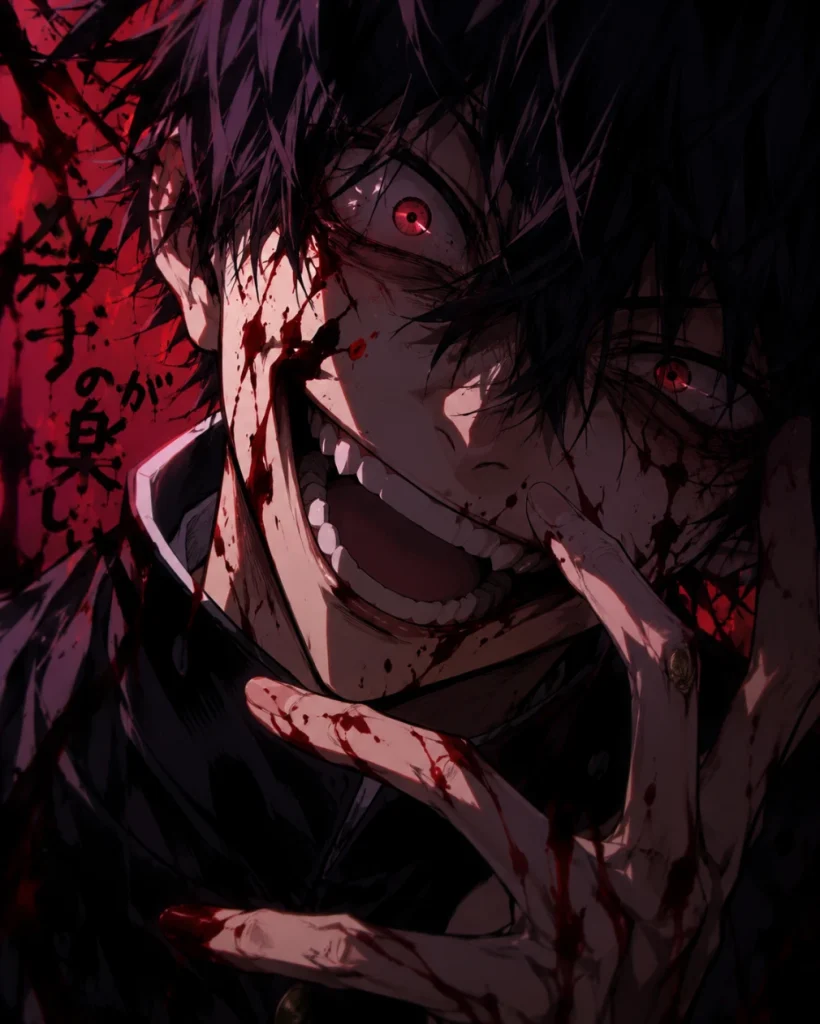
While the term “psychotic” is often used loosely in pop culture to describe extreme or violent personalities, anime frequently employs these characters to explore genuine psychological themes. This master guide breaks down the clinical vs. narrative traits of these psychotic anime characters, analyzes iconic examples, and explores the psychological mechanisms behind why audiences find them so deeply alluring.
The Behavioral Science Behind the Appeal
Why do viewers find themselves drawn to psychotic anime characters who exhibit destabilized, violent, or detached behaviors? Three distinct psychological phenomena root this fascination:
- The Safety of Cognitive Dissonance: Watching a dark character allows viewers to safely explore taboo impulses, moral ambiguity, and the fragility of sanity from a distance, without real-world consequences.
- The Thrill of Volatility: Predictable heroes offer comfort, but highly volatile characters generate narrative tension. When a character completely unmoors themselves from societal rules, the audience can never predict their next move..
- Deconstruction of Trauma: The creators built many of these characters with rich, tragic backstories. Witnessing their descent into madness offers a dramatic, exaggerated look at how severe trauma, isolation, or immense pressure can fracture a person’s psyche.
4 Core Archetypes Found Among Psychotic Anime Characters
      [Antisocial/Narcissistic] ➔ Driven by god complexes and absolute control.
      [The Yandere Archetype]   ➔ Driven by obsessive love and codependency.
      [The Ideological Zealot]  ➔ Driven by radical sociopolitical subversion.
      [The Nihilistic Agent]    ➔ Driven by a desire for systemic, chaotic ruin.
1. The Antisocial Narcissist (The God Complex)
These characters possess immense intelligence paired with a total lack of empathy. They view themselves as higher beings chosen to reshape reality, easily rationalizing heinous acts under the guise of an ultimate good.
- Case Study: Light Yagami (Death Note)Light begins his journey with a utilitarian desire to rid the world of crime. However, once he obtains the power of the Death Note, his mind rapidly fractures into a textbook megalomaniacal god complex. His descent proves that unchecked power coupled with narcissistic traits inevitably results in absolute moral decay.
2. The Obsessive Codependent (The Yandere)
The “Yandere” archetype represents love mutated into a violent, claustrophobic obsession. These characters experience severe emotional dysregulation, shifting instantly from gentle devotion to brutal violence if their bond is threatened.
- Case Study: Yuno Gasai (Future Diary)Yuno is the definitive blueprint for this archetype. Her profound psychological trauma manifests as an absolute, uncompromising obsession with the protagonist, Yuki. Her duality—operating as a sweet high school student one moment and a cold-blooded killer the next—creates an intense, shifting atmosphere throughout the narrative.
3. The Ideological Nihilist (The Anti-Establishment Anarchist)
These individuals reject societal frameworks entirely. Their cognitive distortions manifest as an intellectual superiority complex, where they view the established social order as a fake cage that must be violently dismantled.
- Case Study: Shogo Makishima (Psycho-Pass)Makishima is a deeply philosophical antagonist who cannot be read by the dystopian government’s psychological profiling system (The Sibyl System). His complete detachment from societal programming allows him to orchestrate horrific crimes with a totally calm pulse, forcing the audience to question the true nature of institutionalized justice and sanity.
4. The Oppressive Authoritarian (The Obsessive Dictator)
This profile manifests as a rigid, tyrannical need for absolute domination. Their madness is systemic, structured, and institutionalized rather than chaotic.
- Case Study: Satsuki Kiryuin (Kill la Kill)While driven by an ultimate, hidden goal to overthrow a greater threat, Satsuki initially operates with cold, iron-fisted madness. Her willingness to subject an entire population to a ruthless academic hierarchy explores the psychological realities of an oppressive upbringing and the lengths to which an individual will go to fulfill a consuming ambition.
Structural Matrix: Analyzing Narrative Profiles
| Character | Dominant Psychological Trait | Core Motivation | Narrative Trigger |
| Light Yagami | Megalomania / Antisocial Tendencies | Purging the world; becoming a deity. | Acquisition of supernatural execution power. |
| Yuno Gasai | Extreme Codependency / Dissociation | Ensuring the absolute survival of her love. | Any threat of separation or romantic rivalry. |
| Shogo Makishima | Intellectual Nihilism / Lack of Empathy | Awakening humanity from a tech-dictated slumber. | The artificial optimization of human free will. |
| Satsuki Kiryuin | Authoritarian Fixation / Hyper-Control | Total subjugation of her environment for a future coup. | External systemic oppression and maternal trauma. |
Deep Thematic Foundations
Madness Intertwined with Power
Anime frequently uses psychological deterioration to warn against the corrupting nature of absolute control. When a character gains unparalleled power, creators use their mental breakdown to illustrate how quickly human morality can disintegrate when stripped of traditional boundaries and accountability.
The Fine Line Between Devotion and Delusion
Through the lens of hyper-obsessive characters, narratives deconstruct the dark underbelly of human relationships. By elevating romantic or ideological devotion to a level of lethal delusion, these stories force viewers to look closely at the boundary separating healthy empathy from toxic, destructive codependency.
Frequently Asked Questions (FAQ)
What is the difference between clinical psychosis and how psychotic anime characters are written?
In real-world clinical psychology, psychosis involves a structural break from reality, characterized primarily by hallucinations, disorganized speech, and severe delusions. In contrast, psychotic anime characters are usually written using a narrative shorthand for characters exhibiting severe antisocial personality disorder, borderline emotional dysregulation, or chaotic, unprovoked violent tendencies.
Why do audiences feel empathy for these dark, psychotic anime characters?
Audiences feel empathy because skilled storytellers ground the character’s psychological break in severe trauma, systemic betrayal, or profound isolation. When the audience is shown the tragic sequence of events that broke a character’s mind, they can understand why the character became distorted, even while completely condemning their violent actions.
What role do these characters play in challenging societal norms?
Characters who reject or break societal rules function as mirror critiques of the real world. By pushing psychotic anime characters to their absolute limits within a heavily controlled or corrupt fictional society, anime creators can subtly critique real-world authority structures, the suppression of individuality, and the mental health toll of unrealistic social pressures.