


We live in a world of endless access.
At any moment, we can order food, stream a movie, scroll through thousands of opinions, or peek into the lives of people we’ve never met. The modern smartphone has essentially become a portal to an unlimited supply of entertainment, information, and distraction.
On the surface, this seems like an incredible achievement. Human beings have never had more convenience, more options, or more control over what they consume.
But there’s a question we don’t ask often enough:
What happens when a brain that evolved in a world of scarcity suddenly finds itself surrounded by infinite stimulation?
This question becomes especially interesting when we look at online adult entertainment.
Few topics are simultaneously so common and so rarely discussed. Millions of people interact with this content every day, yet it remains surrounded by discomfort, assumptions, and cultural taboos. Conversations about it often become debates about morality, personal values, or politics.
Those discussions matter, but they’re not the focus here.
Instead, let’s examine the issue through a different lens—one grounded in psychology, neuroscience, and human behavior.
Because when researchers look beyond the controversy, they uncover something fascinating: the modern brain may be facing a challenge it was never designed to handle.
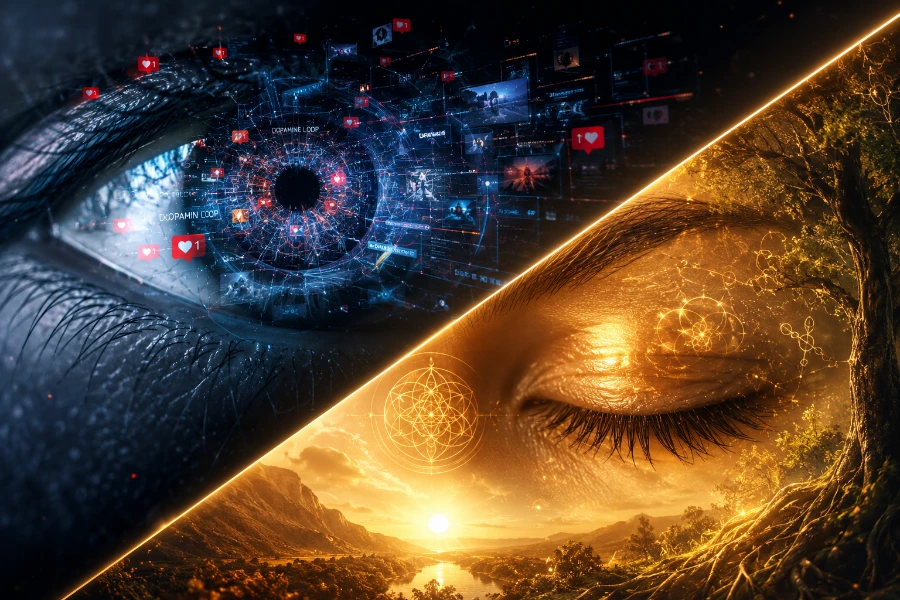
A Brain Built for Scarcity
To understand what’s happening, we need to travel backward for a moment.
For the overwhelming majority of human history, life looked very different from today. Food wasn’t available on demand. Entertainment didn’t exist at the push of a button. Social opportunities were limited by geography. Most rewards required effort, patience, and uncertainty.
Our brains evolved under those conditions.
This matters because the human reward system wasn’t designed for abundance. It was designed for survival.
When our ancestors discovered calorie-dense food, formed social bonds, or found opportunities to reproduce, their brains released neurochemicals that reinforced those behaviors. The message was simple:
“This is important. Remember it. Seek it again.”
That system worked remarkably well for thousands of generations.
The challenge began when technology changed the environment faster than biology could adapt.
Today, many of the rewards our ancestors worked hard to obtain can be accessed instantly. Instead of scarcity, we live in abundance. Instead of occasional stimulation, we experience constant stimulation.
And the brain is still operating with ancient hardware.
The Sugar Comparison
Many neuroscientists use a surprisingly simple analogy to explain this phenomenon.
Think about sugar.
In nature, sweetness was relatively rare. Finding honey or ripe fruit was a valuable event because it provided energy that could help people survive.
As a result, humans evolved to love sweet foods.
The problem wasn’t sweetness itself.
The problem emerged when food manufacturers learned how to concentrate and mass-produce it.
Suddenly, the reward system that once helped people survive was being overwhelmed by an environment filled with highly processed products that delivered more stimulation than nature ever intended.
Many researchers argue that digital experiences can create a similar dynamic.
The internet has become incredibly effective at delivering concentrated forms of novelty, excitement, and reward. Whether it’s social media, online gaming, endless video feeds, or adult content, the underlying pattern is often the same.
Technology takes a natural human drive and amplifies it.
This amplification creates what psychologists sometimes call a “super-stimulus”—something that exaggerates features the brain is naturally attracted to.
And that’s where things become complicated.
Understanding Dopamine
One of the most misunderstood concepts in modern psychology is dopamine.
People often describe it as the brain’s pleasure chemical, but that description doesn’t tell the whole story.
Dopamine is heavily involved in motivation, anticipation, and the pursuit of rewards.
In other words, it’s less about enjoyment itself and more about wanting.
Imagine meeting someone you’re interested in.
You have to introduce yourself, navigate uncertainty, deal with the possibility of rejection, build trust, and invest time in developing a connection. The process contains effort, vulnerability, and unpredictability.
Those challenges are part of what makes the reward meaningful.
Now compare that experience to digital environments designed to provide immediate gratification.
The effort is dramatically reduced.
The uncertainty disappears.
The reward becomes instant.
From the brain’s perspective, this can create a very different learning environment.
Over time, repeated exposure to highly stimulating experiences can influence how the reward system responds to everyday life.
Researchers continue to debate the extent of these effects, but one pattern appears consistently across many areas of behavioral science: when people become accustomed to intense stimulation, ordinary experiences can feel less engaging by comparison.
When Real Life Starts Feeling Less Interesting
Most people have experienced some version of this.
After spending hours scrolling social media, a quiet evening can feel strangely dull.
After binge-watching fast-paced content, reading a book may require more effort than it once did.
The same principle can apply to many forms of digital stimulation.
The brain adapts.
Adaptation is actually one of the brain’s greatest strengths. It allows us to learn, survive, and function in changing environments.
But adaptation has side effects.
When stimulation levels rise consistently, expectations often rise with them.
As a result, activities that once felt rewarding can begin to feel less exciting.
A conversation with friends.
A walk outside.
A hobby.
A professional achievement.
Even moments of genuine intimacy.
None of these experiences necessarily becomes less valuable. Instead, they may struggle to compete with highly concentrated forms of stimulation that demand far less effort while delivering immediate rewards.
This doesn’t happen overnight.
It’s usually gradual.
Which is precisely why many people don’t notice it until they find themselves feeling increasingly disconnected from activities that once brought them fulfillment.
The Stories We Learn From Media
Another psychological concept worth exploring is something known as Script Theory.
The idea is simple.
Human beings learn social behavior through observation.
From childhood onward, we absorb thousands of examples of how relationships, friendships, conflict, romance, and intimacy are supposed to work.
These examples become internal scripts.
Most of the time, we’re not even aware they’re there.
We simply assume certain situations should unfold in certain ways because that’s what we’ve repeatedly seen.
The media plays a powerful role in shaping those expectations.
Movies influence our ideas about romance.
Television shapes our assumptions about success.
Social media affects our perceptions of happiness.
And adult entertainment can influence expectations surrounding intimacy.
The challenge is that entertainment is designed primarily to capture attention.
Its goal is not to provide realistic education.
As a result, the scenarios presented on screen often prioritize fantasy, performance, and visual appeal over the realities of healthy human relationships.
Real intimacy is rarely seamless.
It’s awkward at times.
It requires communication.
It involves vulnerability, trust, patience, and emotional safety.
Those qualities don’t always make for compelling entertainment, which means they’re often minimized or excluded.
Over time, repeated exposure to unrealistic portrayals can create a gap between expectation and reality.
And that gap can become a source of frustration.
The Comparison Trap
One of the most powerful forces in human psychology is comparison.
We compare our appearance to others.
Our achievements.
Our relationships.
Our lifestyles.
The internet has amplified this tendency dramatically.
Every day, people compare their real lives to carefully curated digital experiences.
The same dynamic can occur in intimate relationships.
When expectations become shaped by highly edited, exaggerated portrayals, real human experiences may begin to feel inadequate.
Not because they are inadequate.
But because the comparison itself is unfair.
A real person cannot compete with a fantasy designed for maximum stimulation.
A real relationship cannot compete with a manufactured performance optimized for attention.
When people lose sight of that distinction, dissatisfaction often follows.
And ironically, the pursuit of greater stimulation can sometimes move them further away from the connection they’re actually seeking.
Awareness Instead of Shame
This is where many conversations go wrong.
People often frame the issue in terms of guilt, shame, or moral failure.
But shame rarely creates meaningful change.
More often, it creates secrecy.
It encourages people to hide behaviors rather than understand them.
Awareness is different.
Awareness asks questions.
Why am I engaging in this behavior?
What need am I trying to meet?
How does it affect my mood, motivation, relationships, and overall well-being?
Those questions create space for honest reflection.
And reflection creates the possibility of change.
The goal isn’t perfection.
The goal is consciousness.
The Bigger Picture
The internet is not inherently harmful.
Neither is technology.
These tools have connected people across continents, democratized knowledge, and created opportunities that previous generations could never have imagined.
But every tool shapes the people who use it.
The digital environment influences our attention, habits, expectations, and emotional lives, whether we realize it or not.
That’s why awareness matters.
Not because technology is evil.
Not because stimulation is bad.
But because human beings function best when they understand the forces influencing their behavior.
At the end of the day, the most important question isn’t what technology can do.
It’s what we choose to do with it.
The digital world will continue to offer faster entertainment, stronger stimulation, and more sophisticated ways to capture our attention.
That trend is unlikely to reverse.
But there are still experiences that no algorithm can replace.
A meaningful conversation.
A genuine friendship.
A shared laugh.
A difficult challenge was overcome through effort.
A relationship built on trust rather than fantasy.
Those experiences may not provide instant gratification.
They may not deliver the same intensity as a screen.
But they offer something far more valuable: depth.
And in a world overflowing with stimulation, depth may become one of the most important things we protect.