

Exploring the Legends of Ancient Indian Deities
Ancient Indian deities hold a special place in the rich tapestry of Hindu mythology. Their stories are filled with wonder and wisdom. These deities are not just figures of worship but also symbols of profound truths.
Hinduism, one of the oldest religions, boasts a vast pantheon. Each god and goddess has unique roles and stories. The legends of these deities are woven into the fabric of Indian culture and spirituality.
From the mighty Trimurti to the fierce goddess Kali, each deity has a distinct persona. Their tales convey moral lessons and reflect human emotions. They are celebrated in festivals and revered in temples across India.
Understanding these deities offers insights into the spiritual and cultural heritage of India. Their influence extends beyond religion, shaping art, philosophy, and daily life. Join us as we explore the legends of these ancient Indian deities.
The Origins of Hindu Deities: Ancient Roots and Texts
The origins of Hindu deities are deeply embedded in ancient Indian texts. These texts have preserved their stories for millennia. The Vedas, composed over 3,000 years ago, form the backbone of Hindu belief.
Hindu scriptures like the Puranas and epics such as the Mahabharata detail the lives of these deities. These writings elaborate on their roles and relationships. They offer fascinating insights into the creation of the universe and the cosmic order.
Key sources of ancient Indian deities include:
- The Rigveda, which contains hymns to various gods.
- The Puranas, rich in myths and legends.
- The Ramayana and Mahabharata are epic narratives featuring gods and their divine exploits.
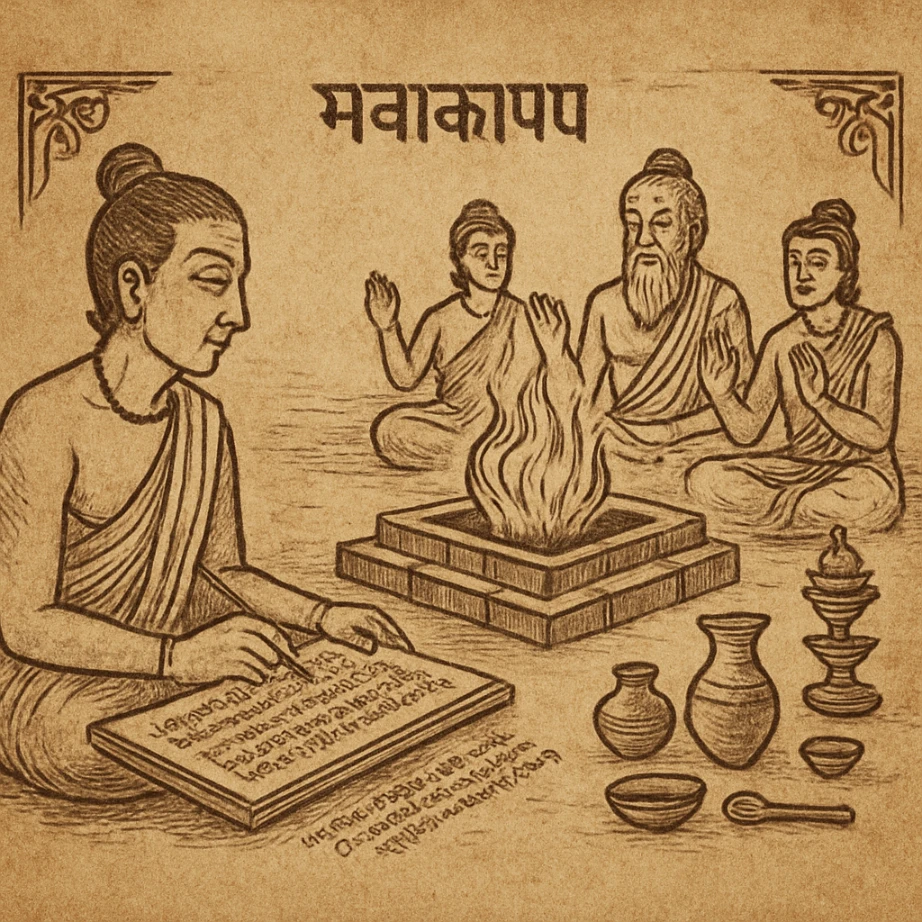
These texts illustrate the dynamic nature of Hindu mythology. Deities are portrayed as manifestations of cosmic principles. They embody traits like love, wisdom, and strength.
The evolution of deities over time reflects cultural changes. Regional traditions also added layers to their personalities. Thus, the stories of these ancient Indian deities continue to resonate with contemporary audiences, bridging past and present.
The Hindu Pantheon: Charting the Gods and Goddesses
The Hindu pantheon is vast, with numerous gods and goddesses, each with specific roles. This diversity reflects the complexities of Hindu beliefs and regional variations. The deities form an intricate tapestry of myth and legend.
Each deity possesses unique attributes and stories. Their iconography often symbolizes deeper spiritual truths. Understanding this symbolism helps in grasping their significance in Hindu mythology.
Core elements of the Hindu pantheon include:
- The Trimurti: Brahma, Vishnu, and Shiva.
- Goddesses like Saraswati, Lakshmi, and Parvati.
- Avatars such as Krishna and Rama.
- Regional gods, with unique legends and depictions.
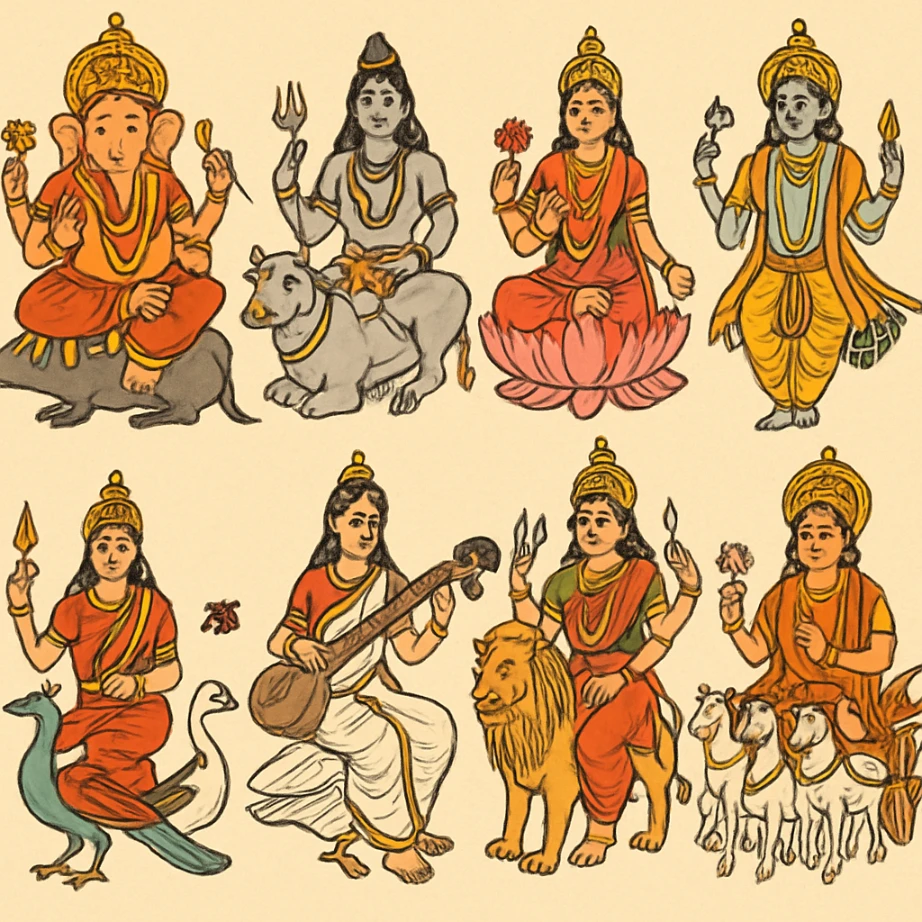
A chart of Hindu gods and goddesses reveals a divine family tree. It outlines their relationships and hierarchies. Studying these interconnections offers a clearer understanding of their personas and roles.
God names in Indian culture often carry sacred meanings. They reflect the deity’s divine aspect or power. For example, Ganesha is known as the remover of obstacles, symbolizing new beginnings.
Through rituals and festivals, devotees interact with these deities. These practices vary by region and tradition. Yet, the reverence shown reflects a deep-rooted cultural and spiritual connection spanning ages.
The Trimurti: Brahma, Vishnu, and Shiva
At the heart of Hinduism lie three principal deities known as the Trimurti. These are Brahma, Vishnu, and Shiva. Each represents a crucial aspect of the universe’s lifecycle.
Brahma is the creator, responsible for the world’s genesis. His depictions include four faces, signifying complete knowledge. Despite his vital role, he’s less worshiped in contemporary rituals.
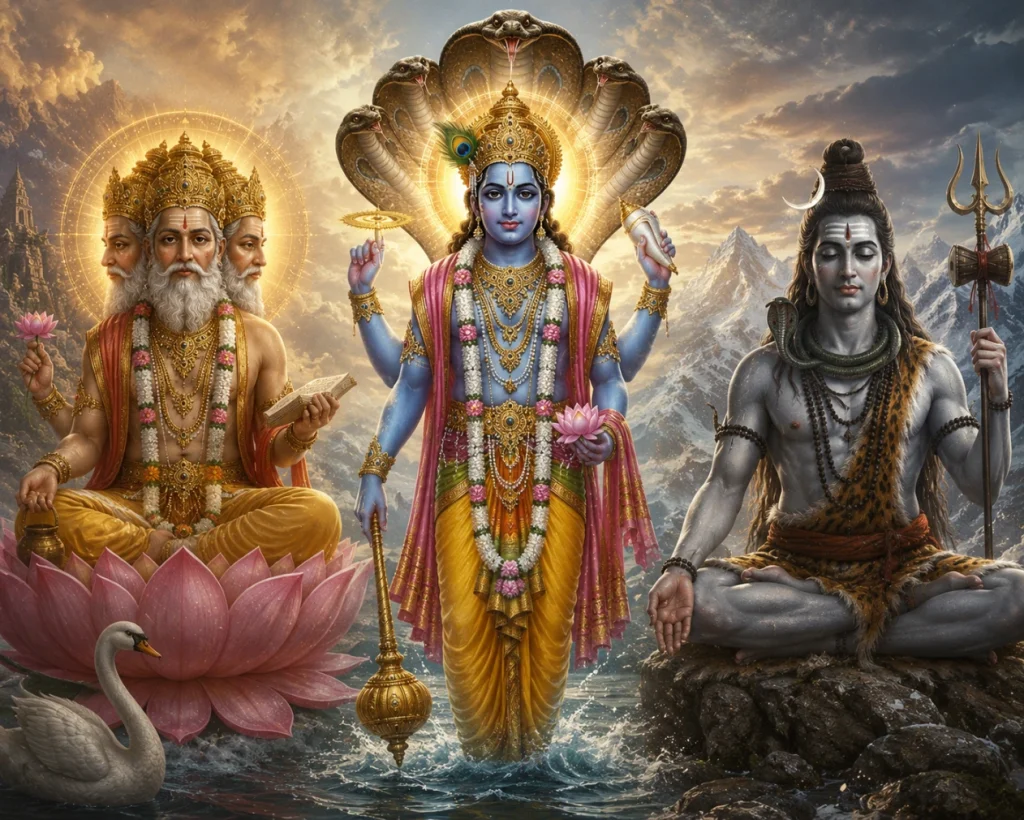
Vishnu, the preserver, maintains cosmic order and harmony. He embodies compassion and protection, often descending in avatars like Rama and Krishna. His role is pivotal in safeguarding dharma.
Shiva embodies destruction and transformation. Often depicted with a third eye, he symbolizes inner vision and wisdom. His dance, the Tandava, signifies the cosmic cycles of creation and dissolution.
The balance among these three deities is vital. Together, they ensure the universe’s smooth function. Their stories and symbology hold profound philosophical insights for Hindus, illustrating life’s cyclical nature.
Goddesses of Power and Wisdom: Saraswati, Lakshmi, Parvati, Durga, and Kali
Hinduism celebrates powerful goddesses embodying wisdom, prosperity, and strength. Among them, Saraswati stands out as the goddess of knowledge and arts. Her serene persona inspires musicians, scholars, and artists.
Lakshmi, revered for wealth and fortune, brings prosperity to her devotees. She is frequently worshiped during Diwali, a festival of lights. Her blessings ensure abundance and success.
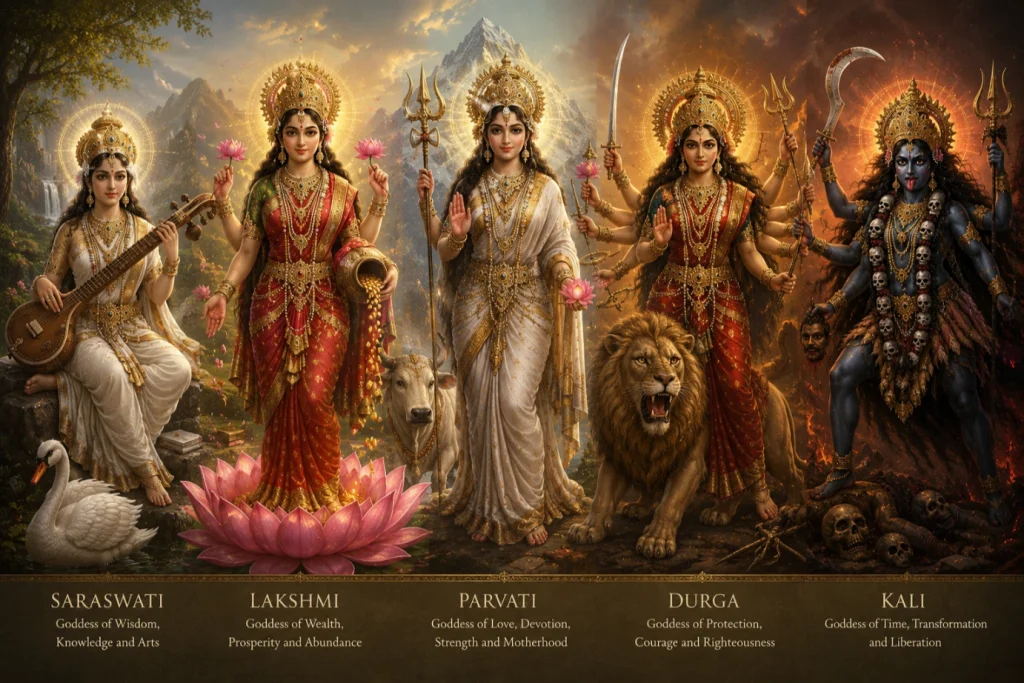
Parvati, known as the goddess of love and devotion, embodies marital bliss. She is Shiva’s beloved wife and Ganesha’s mother. Her tales emphasize compassion and dedication.
Durga epitomizes divine strength and courage. As a warrior goddess, she combats evil forces. Her triumphant battle against the buffalo demon is celebrated during Navaratri.
Kali, a fierce form of Parvati, represents time and change. With her powerful imagery, she signifies the end of evil and the cycle of rebirth. Her presence instills awe and respect.
These goddesses play essential roles in Hindu mythology and devotion. They symbolize various aspects of feminine divine energy, known as Shakti. Their stories provide deep moral lessons and remain cherished in daily worship and festivals.
Divine Families: The Hindu Deities Family Tree
The Hindu pantheon consists of complex divine families rich with interwoven relationships. At the core is the family of Lord Shiva and Goddess Parvati. Their sons Ganesha and Kartikeya play unique roles in mythology, each with distinct qualities.
Ganesha is celebrated as the remover of obstacles and a patron of wisdom. Kartikeya, also known as Murugan, is revered as a warrior god and symbol of valor. Both have a special place in Hindu hearts, with regional variations in their worship.
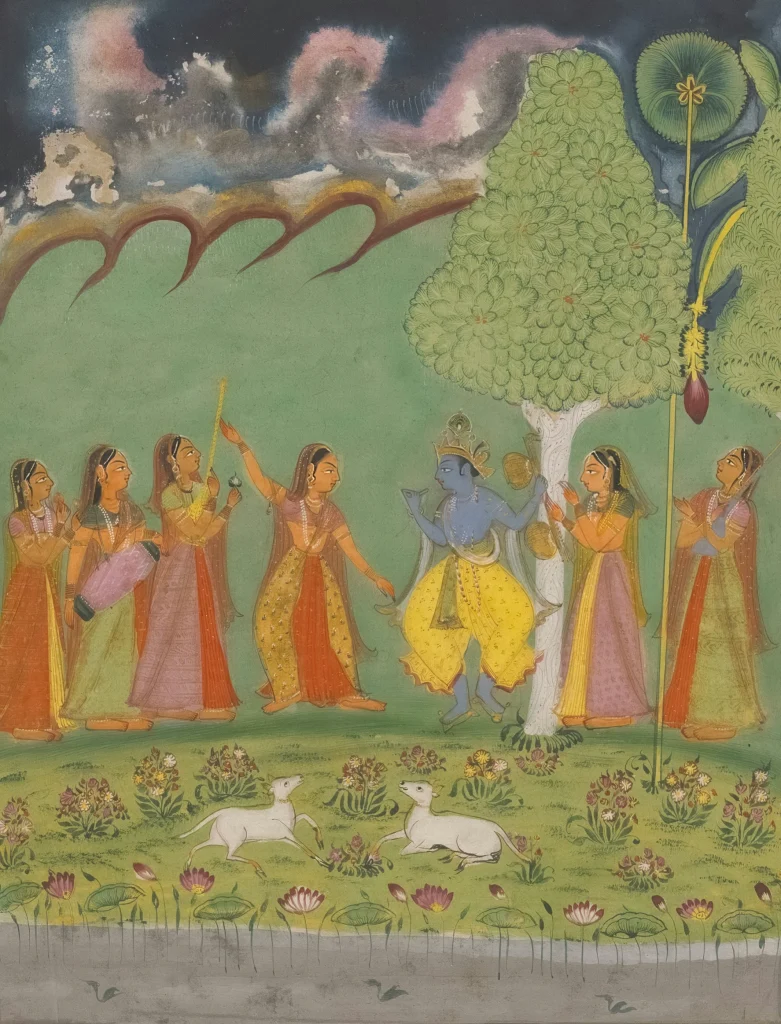
The Vishnu family also holds great significance. Vishnu’s consort, Lakshmi, joins him in maintaining cosmic balance. Their relationship exemplifies harmony and prosperity.
This interconnectedness extends to numerous other gods and goddesses, creating a vast network. The Hindu deities’ family tree represents diverse aspects of life and moral values. It conveys important cultural stories and lessons through these divine relationships.
Key divine families and their members include:
- Shiva’s family: Parvati, Ganesha, Kartikeya
- Vishnu’s family: Lakshmi
- Brahma’s family: Saraswati
These intricate ties highlight the rich tapestry of Hindu mythology and underscore its depth and beauty.
Avatars and Incarnations: The Many Forms of the Divine
In Hindu mythology, the concept of avatars plays a vital role. Avatars are divine incarnations that descend to guide, protect, and restore cosmic balance. This idea is especially significant with the god Vishnu, who is said to have ten main avatars.
These avatars, known as the Dashavatara, include well-known figures like Rama and Krishna. Each incarnation addresses specific divine missions, combatting evil and restoring dharma. They illustrate the adaptability and timeless relevance of divine presence in human affairs.
Vishnu’s avatars showcase various forms and appearances, each with unique stories and attributes. This diversity highlights the profound nature of the divine, echoing the adaptability of Hindu deities across ages.
Key avatars of Vishnu include:
- Matsya: the fish
- Kurma: the tortoise
- Varaha: the boar
- Narasimha: the man-lion
- Vamana: the dwarf
- Parashurama: the warrior priest
- Rama: the prince
- Krishna: the cowherd
- Buddha: the enlightened one
- Kalki: the future warrior
These avatars, through their narratives, remind us of the eternal cycle of creation, preservation, and transformation that guides human destiny.
South Indian Gods: Unique Legends and Regional Variations
South Indian deities possess distinctive characteristics, stories, and forms. These gods often reflect the region’s rich cultural and linguistic diversity. South Indian traditions add layers of depth to Hindu mythology through their unique legends.
One prominent South Indian god is Murugan, also known as Kartikeya, the son of Shiva and Parvati. He is a warrior deity, revered for his bravery and wisdom. Often depicted with a spear, Murugan is celebrated in festivals like Thaipusam.
Another significant deity is Ayyappa, a god born from the union of Shiva and Vishnu in his female form, Mohini. Ayyappa’s legend is notable for themes of celibacy and asceticism. His temple in Sabarimala attracts millions of devotees annually.
Distinct legends and regional variations include:
- Murugan: Tamil Nadu
- Venkateswara: Andhra Pradesh
- Mariamman: Tamil goddess of rain
- Krishna: diverse forms in different states
These deities highlight the vibrant and pluralistic nature of South Indian devotion.
Symbolism, Worship, and Festivals
The symbolism in Hindu iconography is profound and intricate. Each deity in the Hindu pantheon bears unique attributes and vehicles. These symbols convey deeper meanings and cosmic truths.
Worship practices vary extensively across regions. However, they often involve rituals, chants, and offerings to honor the deities. Temples form the epicenter of these spiritual activities, serving as vibrant hubs of devotion.
Festivals play a significant role in celebrating ancient Indian deities. They bring communities together in jubilant harmony. Each festival has its own stories and significance, deeply rooted in Hindu mythology.
Prominent festivals include:
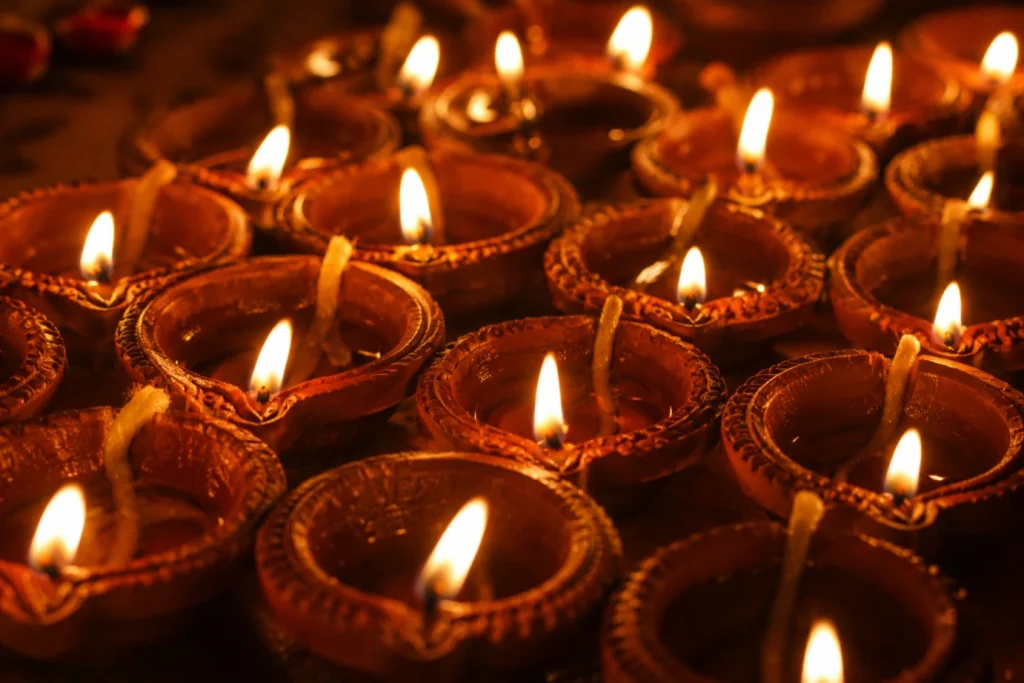
- Diwali: The festival of lights celebrates Rama’s return.
- Navaratri: Nine nights honoring the goddess Durga.
- Ganesh Chaturthi: Celebrating the birth of Ganesha.
- Holi: A festival of colors marking spring and renewal.
These festivals, steeped in tradition, express the sacred stories of gods and goddesses. Through colorful rituals and joyous participation, they keep the legends alive in the hearts of millions.
The Enduring Influence of Ancient Indian Deities
Ancient Indian deities have profoundly shaped cultural and spiritual landscapes across the world. Their stories and attributes continue to inspire art, literature, and philosophy. Through vibrant tales, they impart wisdom that transcends time.
Hindu deities influence not only religious practices but also social norms and values. Concepts like karma, dharma, and moksha, drawn from their legends, permeate everyday life. These principles guide adherents towards leading meaningful lives.
In modern India, these deities are symbols of cultural identity and heritage. Temples dedicated to them are architectural marvels, symbolizing spiritual devotion and community bonding. They stand as testaments to the timeless nature of the beliefs and values enshrined in mythology.
Beyond India’s borders, their influence extends to Southeast Asia and beyond. Various cultures have embraced these deities, integrating their stories into local traditions and practices. Their enduring legacy continues to bridge cultures and inspire countless individuals worldwide.