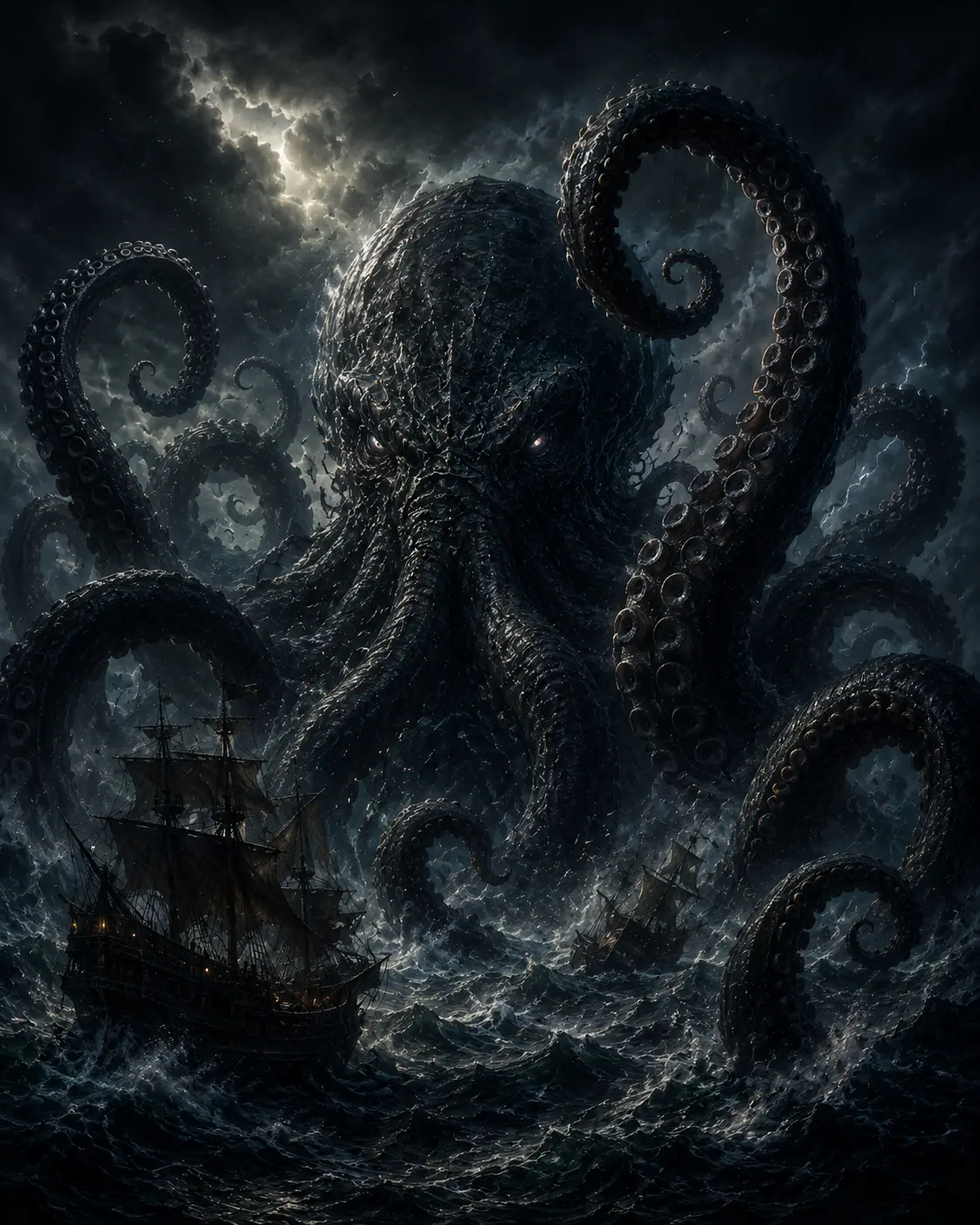
Mythical creatures have enchanted humanity for centuries, filling our imaginations with tales of wonder and awe. These beings often reflect the values, fears, and dreams of the cultures that created them. In this blog post, we will explore ten fascinating mythical creatures from ancient folklore, each imbued with its own unique characteristics and stories.
1. The Phoenix
Origin
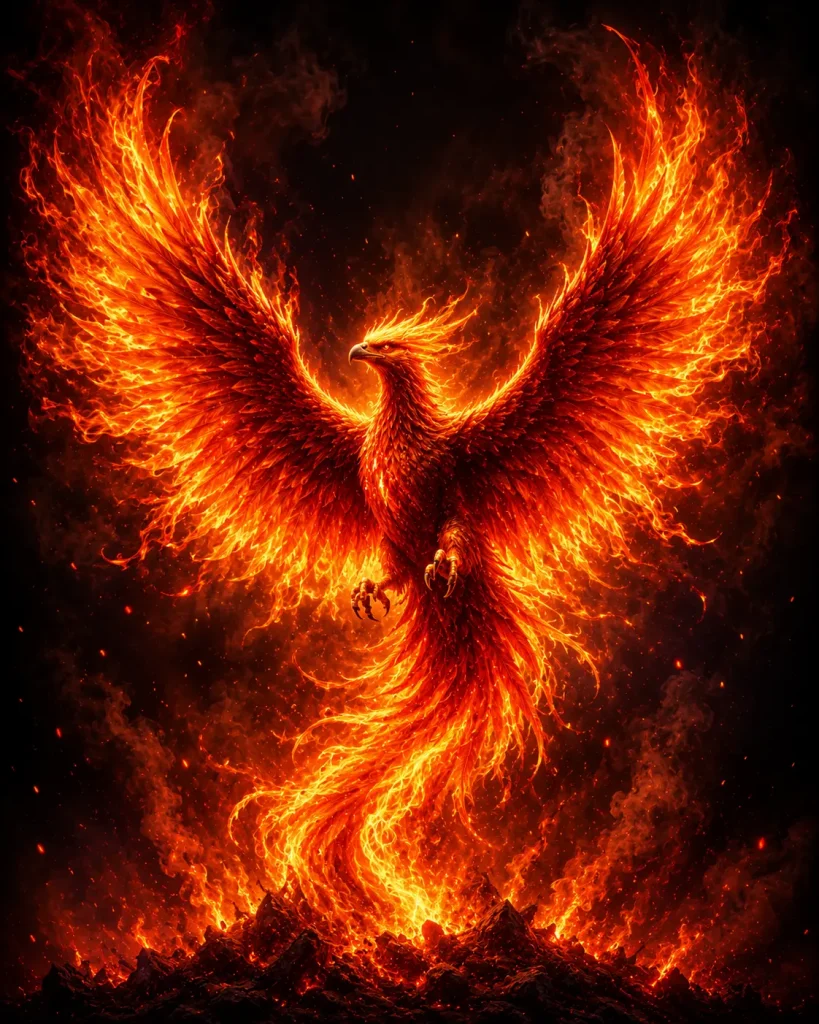
The Phoenix is a legendary bird found in various mythologies, including ancient Egypt, Greece, and Persia.
Characteristics
The Phoenix is known for its ability to be consumed by flames and then reborn from its ashes. It represents immortality, renewal, and the cyclical nature of life.
Cultural Significance
In Egyptian mythology, the Phoenix is associated with the sun god Ra and symbolizes the sun’s daily rebirth. In Greek mythology, it is often described as a beautiful creature with vibrant plumage, showcasing the glory of life, death, and resurrection.
2. The Kraken
Origin
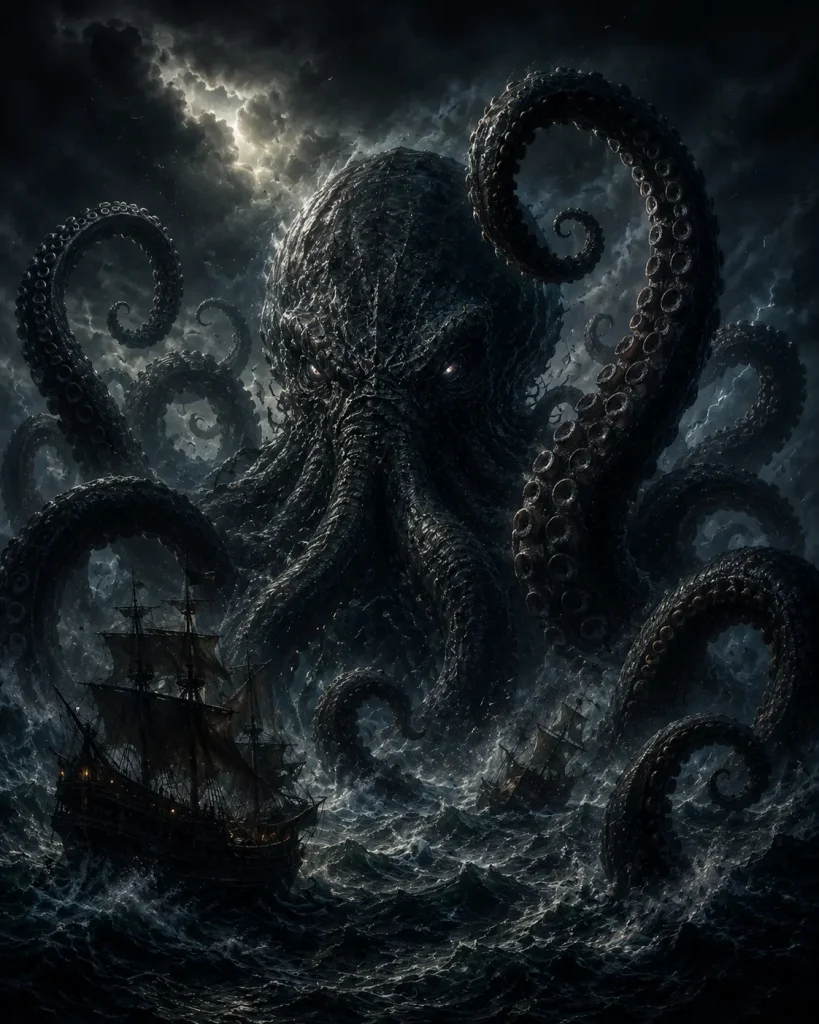
The Kraken is a sea monster from Scandinavian folklore, particularly popular in Norse mythology.
Characteristics
Often depicted as a giant octopus or squid, the Kraken is said to dwell off the coasts of Norway and Greenland, dragging entire ships to the depths of the ocean.
Cultural Significance
The Kraken serves as a metaphor for the unknown dangers lurking beneath the surface of the sea, embodying humanity’s fear of the vast and unexplored ocean depths.
3. The Chimera
Origin
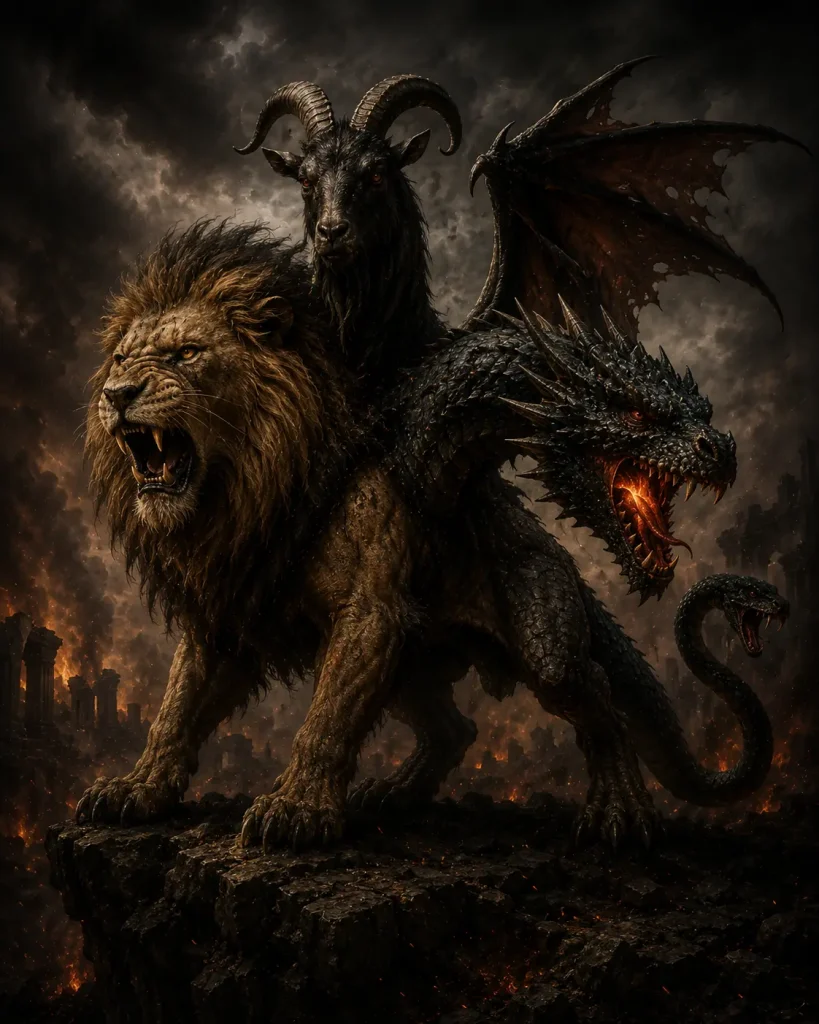
The Chimera is a monstrous creature from Greek mythology, first mentioned in Homer’s “Iliad.”
Characteristics
Typically described as a fire-breathing beast, the Chimera has the body and head of a lion, a goat’s head rising from its back, and a serpent for a tail.
Cultural Significance
The Chimera symbolizes chaos and the blending of different forms, a reflection of the Greek admiration for balance and the horror of uncontrolled forces.
4. The Minotaur
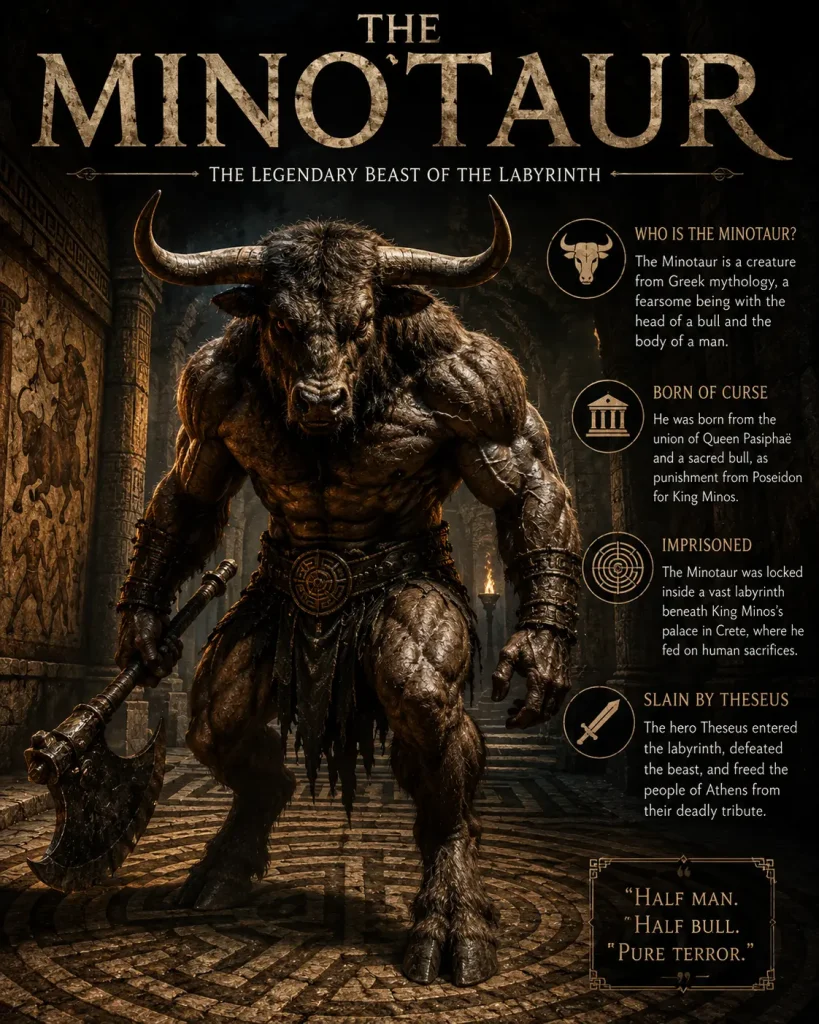
Origin
The Minotaur originates from an ancient Greek myth, specifically from the legend of King Minos of Crete.
Characteristics
Described as having the body of a man and the head of a bull, the Minotaur lived in the Labyrinth, a complex maze designed by Daedalus.
Cultural Significance
The Minotaur represents the duality of humanity — the bestial instincts contrasted with reason and civilization. It also symbolizes the consequences of hubris, as Minos’s refusal to sacrifice the bull led to its birth.
5. The Djinn
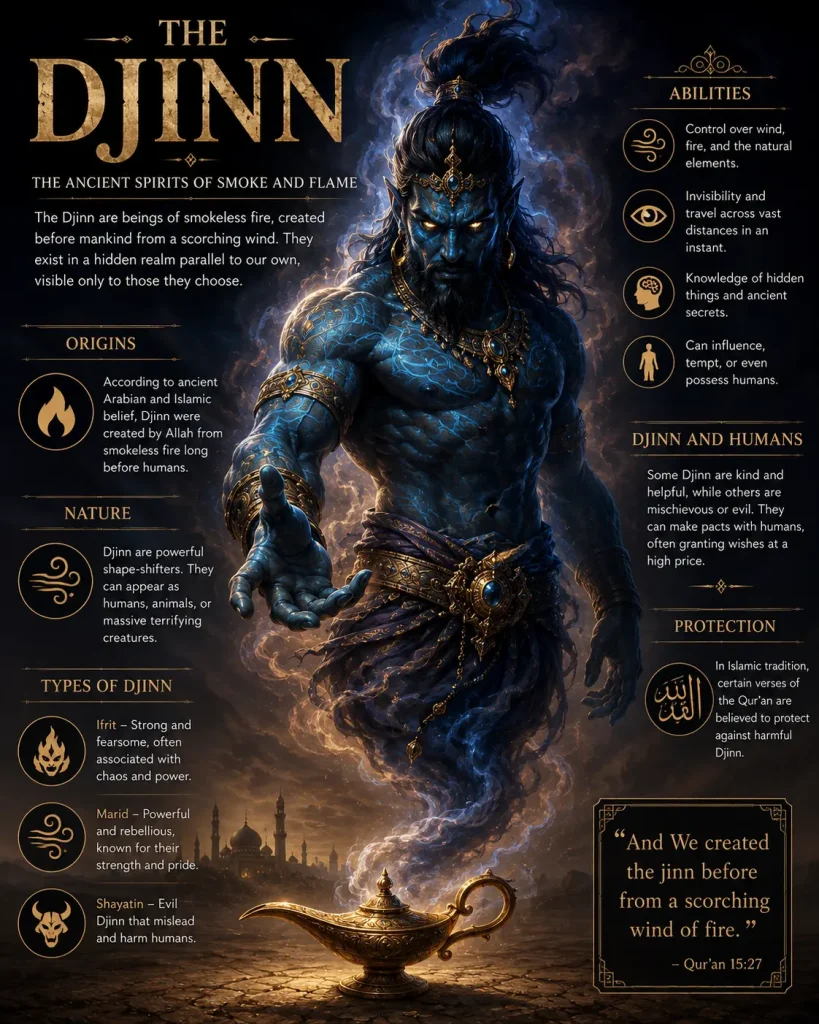
Origin
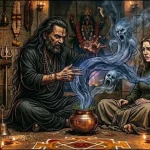
Djinn, or genies, have roots in Arabian mythology and are prominently featured in Islamic culture.
Characteristics
Djinn are supernatural beings capable of granting wishes, but they possess free will and can be either benevolent or malevolent.
Cultural Significance
The tales of Djinn highlight the complexities of desire and consequence, often warning against the dangers of greed and ambition. The story of “Aladdin” is one of the most famous narratives involving a Djinn.
6. The Basilisk
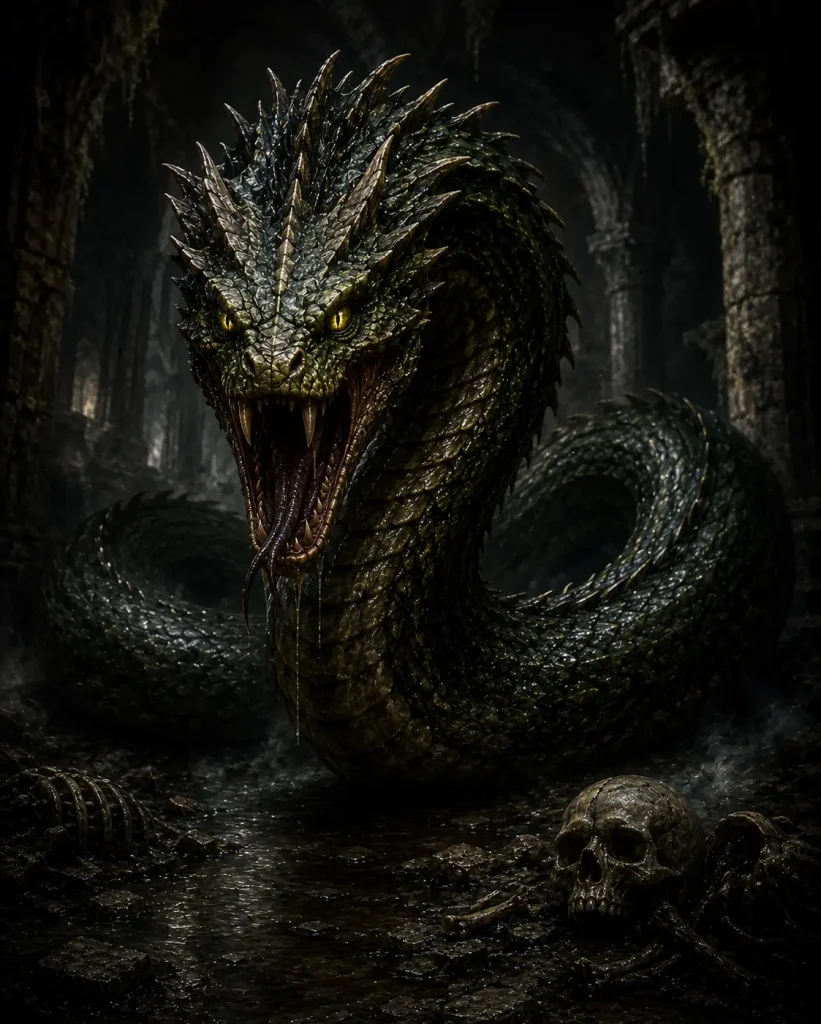
Origin
The Basilisk appears in European medieval bestiaries and is derived from ancient Roman texts.
Characteristics
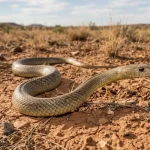
Known as the “King of Serpents,” the Basilisk is said to have the ability to kill with its gaze and is often depicted as a serpent or lizard.
Cultural Significance
The Basilisk symbolizes fear and the unknown, often serving as an allegory for the dangers that lie in unchecked power and hostility.
7. The Sphinx
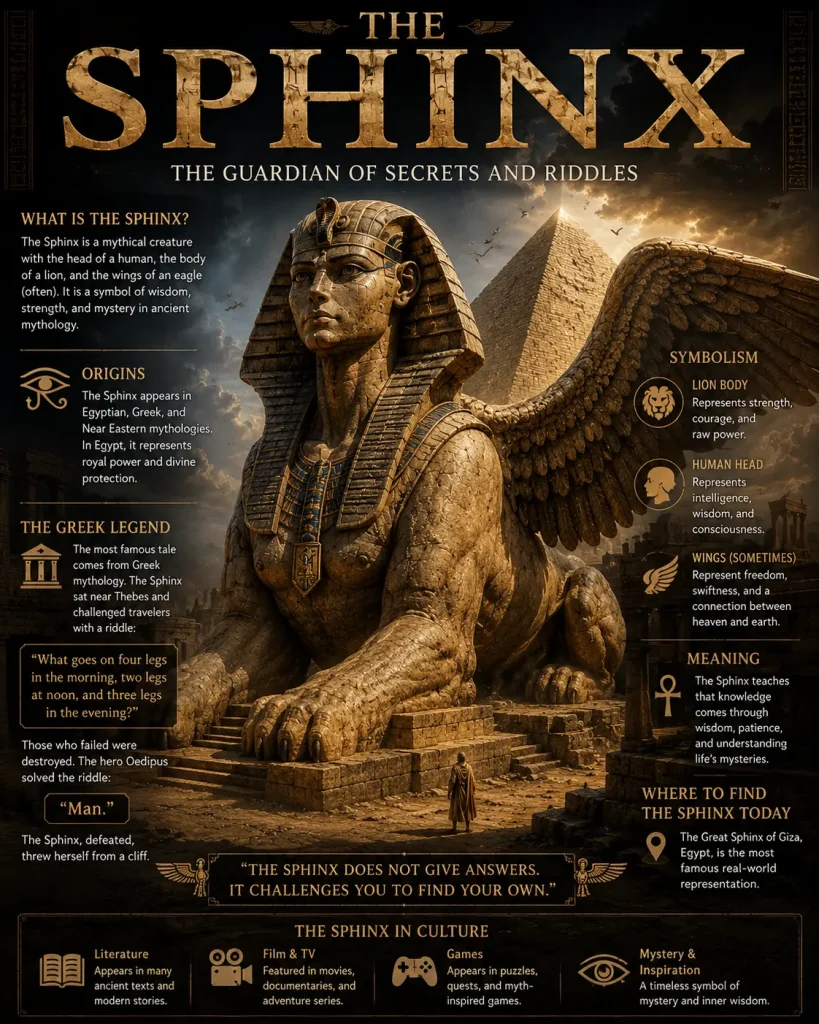
Origin
The Sphinx has its origins in Egyptian and Greek mythology, symbolizing wisdom and mystery.
Characteristics
Usually depicted with the body of a lion and the head of a human, the Sphinx is known for posing riddles. The most famous is found in the story of Oedipus, who must answer it to pass.
Cultural Significance
The Sphinx represents the pursuit of knowledge and the consequences of human hubris. It serves as a guardian of secrets and truth in many narratives.
8. The Yeti
Origin
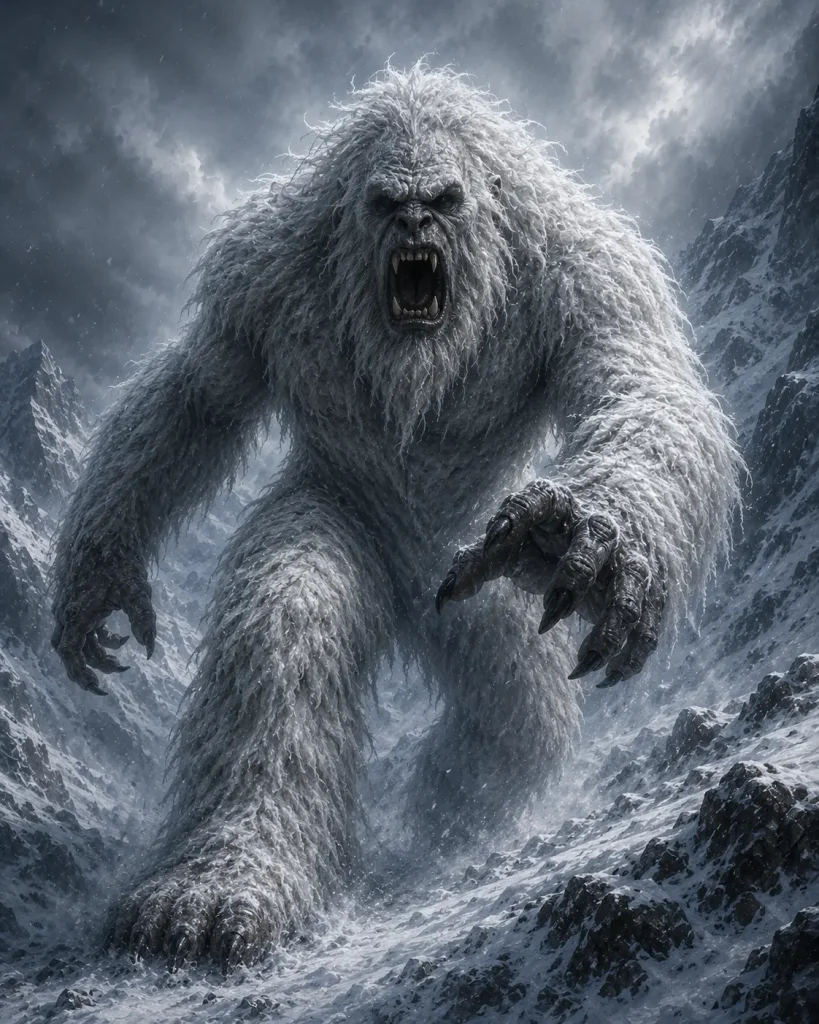
The Yeti, or “Abominable Snowman,” is a creature from Himalayan folklore.
Characteristics
Typically described as a large, ape-like creature, the Yeti is said to inhabit the remote mountains of the Himalayas.
Cultural Significance
The Yeti embodies the mystery of the unexplored wilderness and serves as a symbol of nature’s untamed realms, inspiring countless expeditions and legends.
9. The Banshee
Origin
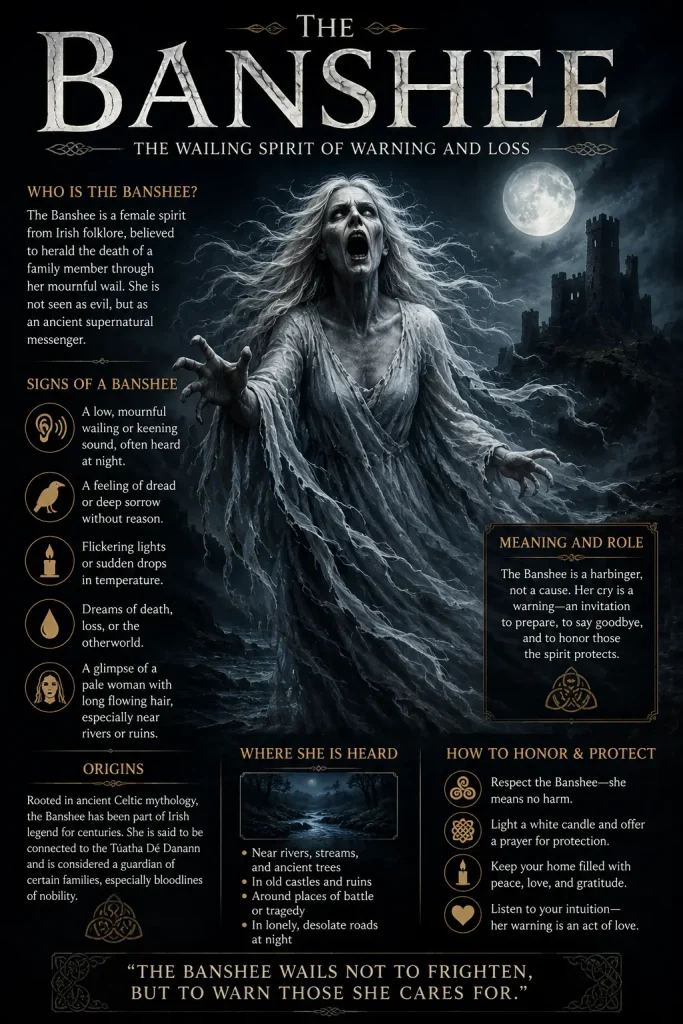
The Banshee is rooted in Irish folklore and is often associated with the otherworld.
Characteristics
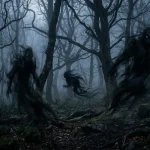
Described as a female spirit, the Banshee heralds death by wailing or keening, serving as an omen for families.
Cultural Significance
The Banshee reflects the deep respect for ancestors in Irish culture and the belief in the interconnectedness of life and death, symbolizing grief and the inevitable passage of time.
10. The Gorgon
Origin
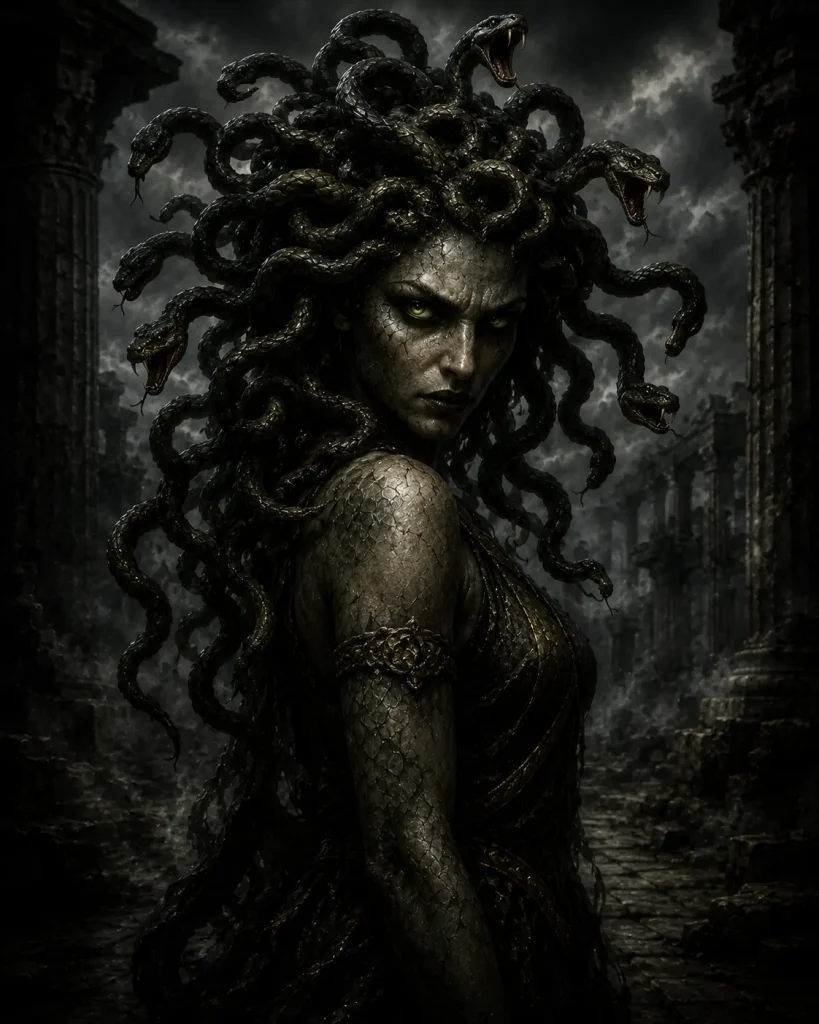
The Gorgon, particularly Medusa, originates from ancient Greek mythology.
Characteristics
Often depicted with snakes for hair, the Gorgon can turn anyone who looks at her to stone. Medusa is the most famous Gorgon, once a beautiful maiden transformed by the goddess Athena.
Cultural Significance
The Gorgon symbolizes the themes of punishment, transformation, and the power of beauty turned monstrous, embodying complex emotional truths concerning jealousy and vengeance.
Conclusion
These ten mythical creatures serve as rich symbols rooted in the folklore of their respective cultures. From the rebirth of the Phoenix to the ominous wails of the Banshee, each being encapsulates humanity’s deepest fears, aspirations, and moral lessons. Exploring these legends reminds us of the power of storytelling in shaping our understanding of the world around us.
Whether through literature, art, or modern adaptations, these mythical beings continue to inspire and resonate with people today, revealing the timeless nature of folklore in enriching our lives and imagination.